Kani · 12 min read
Kani vs Jamawar: Two Kashmir Shawl Traditions
Jamawar shawl or Kani? Both are patterned Kashmir textiles, but one names a format and the other a technique. Compare structure, time, price and handwork.
By Timothy V. Manley
7 November 2026
Jamawar is an all-over patterned shawl, and in Kashmir it was historically woven using the Kani technique: small eyeless wooden bobbins instead of a shuttle, a twill weave with interlocked wefts, worked from a written talim. Kani names the technique; jamawar names the textile format and its design.
Shops in Srinagar, Lahore and London often use the two words as if they were alternatives. A seller offers "a Kani jamawar" or "a jamawar shawl, Kani work", and the buyer is left to work out whether the words describe a technique, a pattern or a price. They describe different things. Once the difference is clear, the price and the reverse of the cloth both become readable.
This is not a quarrel about vocabulary. Kani and jamawar sit at different levels of description. One is a way of making cloth; the other is a kind of cloth that was made that way. Confusing them lets a machine-woven or printed imitation borrow the language of a loom that had nothing to do with it.
We weave in Srinagar and look closely at other people's reverses as well as our own. What follows is the distinction as we use it, with the parts that can be checked against a registered specification and a museum record.
What the two words actually name
Kani is the technique. The registered specification for the Kani Shawl geographical indication describes it precisely: the weft is carried not by a shuttle but by a number of kanis, small eyeless wooden spokes, each threaded with one colour and passed around a counted set of warp ends, exactly as the drawing requires; the cloth is woven in twill weave with the wefts interlocked at every colour join; and the weave follows written instructions called a talim [1].
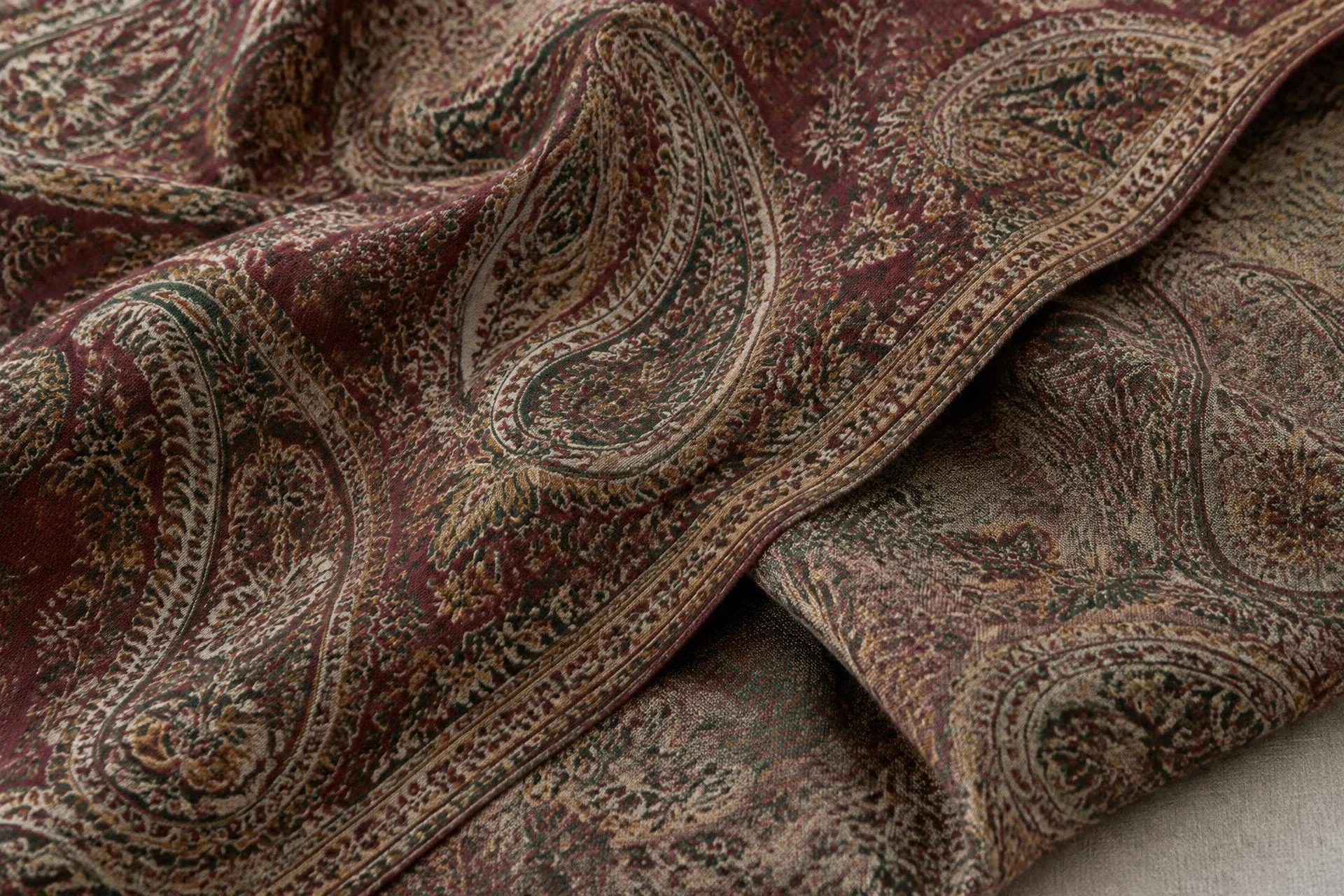
Jamawar is a format and a look. The word is used for a textile with an all-over pattern rather than a plain field with borders and a single central motif. Historically in Kashmir, that all-over pattern was woven using the Kani technique on pashm, the fine undercoat of the Changthangi goat, combed by hand and spun fine [2]. Our guide to what Pashmina is covers the fibre in detail. The relationship is therefore not two crafts standing side by side. It is a technique, and a design format that the technique made possible.
So "Kani jamawar" is not nonsense, and "jamawar" alone tells a buyer less than it seems to: it says what the cloth looks like, not how it was made, and the making is what decides the price.
Kani is also not embroidery. The Jammu and Kashmir Handicrafts Department describes shawl production as two techniques, loom-woven Kani and needle-embroidered Kashmir Sozni work [5]. A patterned shawl can be woven or embroidered, and the two are sold in the same shops at very different prices. If a seller's description mixes weaving and needlework, ask which of the two the piece in front of you actually is.
How a Kani shawl is woven
Four things define the loom work, and all four are visible if you know where to look.
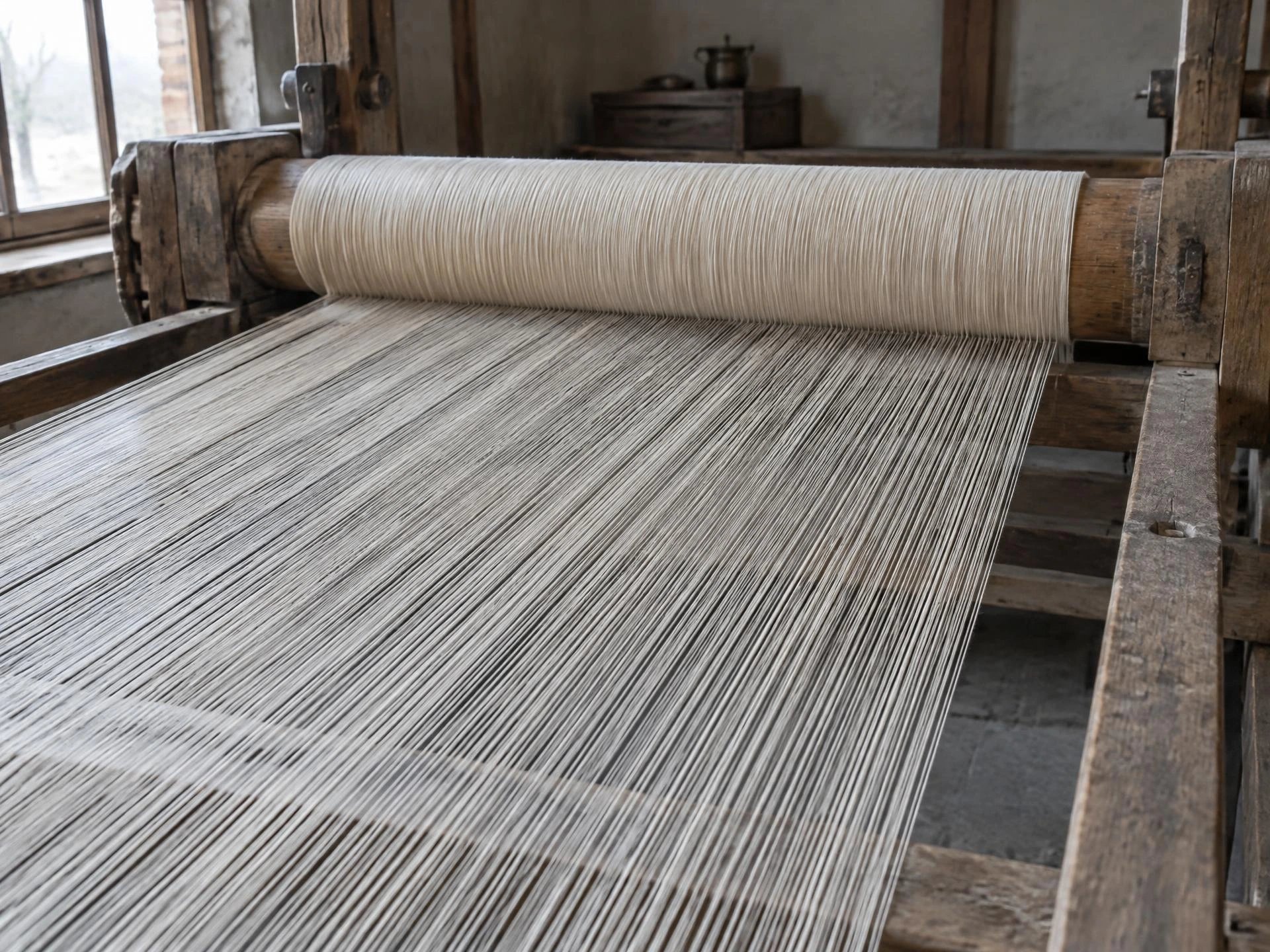
The first is the bobbin. A shuttle crosses the whole warp in one pass. A kani carries one colour into one part of the design and turns back. A pattern with thirty colours is a pattern with thirty small bobbins, each taking its turn around a counted number of warp threads [1].
The second is the interlocking. At every place where two colours meet, the wefts cross and lock rather than floating past each other. This is what gives a Kani its integrity: there is no long loose thread on the reverse waiting to snag, because the structure has no long floats to begin with [1][2].
The third is the talim. The design is not drawn on the warp. It is written as a coded sequence that a reader calls out, line by line, and the weaver follows [1]. This is why a Kani pattern can change every few picks without the weaver having to invent the change, and why the same talim can be woven by different hands to the same result.
The fourth is density, measured in warps per inch. The Victoria and Albert Museum holds a nineteenth-century Kashmir shawl in goat-hair pashmina, a 2x2 twill set at 84 warps to the inch [3]. That figure is a museum measurement of one fine historic piece, not a floor that every workshop meets. In our experience it varies with the fineness of the yarn and the ambition of the design, and a denser warp holds a finer pattern. How a talim is read aloud beside the loom is described in our Kashmir craftsmanship notes.
What a jamawar shawl actually is
A jamawar shawl is one whose pattern covers the field. There is no large plain centre waiting for a border; the design runs across the cloth, and the cloth is read as a surface rather than a frame.
The term is older than the machines that now borrow it, and it is not exclusive to shawls. In the subcontinent it attaches to all-over patterned textiles of several kinds. When a listing says only "jamawar", it is describing a look. The useful questions are what the pattern coverage is, what the fibre is, and how the pattern got there.
The record is worth keeping straight: not every Kashmir shawl was all-over. The V&A's example has an undyed plain centre and separate woven borders, worked in coloured panels around a large floral boteh [3]. That is a bordered shawl, not a jamawar. Both were made in Kashmir, both could use the same fibre and the same loom, and the difference is where the design sits.
Jamawar, in the strict Kashmiri sense, is the all-over expression of the same weaving tradition: pashm, hand-combed, hand-spun, woven with kanis into a twill weave whose colour changes are structural rather than applied [2]. The handwoven Kani shawls we weave belong to that tradition, and the motif that fills so many of these fields has its own long history, told in the paisley shawl.
Time, labour and why the price moves
In our experience a densely patterned Kani occupies two weavers for months, and the calendar is set by the number of colour changes rather than by the size of the shawl. A single band of design may need a fresh bobbin every few picks. The talim turns the drawing into a sequence a weaver can follow, but every line still has to be woven by hand.
Three variables move the price more than anything else. The first is the fineness of the pashm: finer yarn means more warp threads per inch, and more warp threads mean slower work. The second is pattern density: a field that changes colour every centimetre asks far more of the weaver than a large motif with long plain passages. The third is the number of colours, because each one is another bobbin, another join and another chance to make a mistake that has to be undone.
Size matters less than buyers assume. A small, densely patterned piece can carry more labour than a large, sparsely patterned one. This is one reason a price per gram, or a price per square metre, is a poor way to compare Kani shawls, and why we quote per piece. Buyers comparing asking prices in Lahore can read our guide to the Kani shawl price in Pakistan.
Handwork and the machine jacquard
A jacquard loom lifts warp threads from a punched card or a digital file and passes a shuttle, or a set of them, across the full width. The pattern is produced by the mechanism, not by the weaver's hand, and the weft is cut at the edge of each colour block. The result can be beautiful, consistent and inexpensive. It is not the same cloth.
The differences show up in three places. The repeat is the first: a jacquard design repeats exactly, because the file repeats exactly, while a handwoven field drifts by a pick or two across its width. The reverse is the second: a machine piece either carries trimmed tufts and short floats or shows a pattern rendered in small stepped blocks, while a Kani reverse shows interlocked colour joins that follow the drawing. The selvedge is the third: machine edges are uniform, and handwoven edges carry the small irregularities of tension and weft changes.
A third category is printed cloth sold as "jamawar print": the pattern rests on top of the cloth, and the back carries only a faint echo of the front, with no structural change. On a printed piece, the colour transitions are sharp at every scale, including under a lens, and the cloth itself is usually a plain weave with no interlocked colour structure.
None of this makes machine work dishonest. It becomes dishonest when the word jamawar is used to imply a loom that was never involved. If you are paying a handwoven price, ask to see the reverse in daylight before you agree to anything.
Reading the reverse
Turn the shawl over before you discuss price. Four observations do most of the work.
Colour joins: on a Kani, look for tiny interlocked bundles where two colours meet, following the outline of the design. The joins are structural, so they appear as a slight thickening rather than a knot.
Floats: there should be no long loose threads crossing the back. Interlocking removes the need for them [1]. A back covered in long floats is a different structure, however pretty the front.
Pattern resolution: handwoven curves are stepped at the scale of the weave, and the stepping is irregular. Machine curves step at the resolution of the file and repeat exactly.
Edges and fringe: on a handwoven piece the fringe is usually the warp itself, twisted or knotted by hand, and the selvedge shows the marks of tension. A cut, sewn or glued edge is a signal to look more carefully at everything else.
We ask to see the middle of the field, not only the border. Borders are where imitations spend their effort, because a border is what a buyer sees first. The centre is where the structure has to keep its promises for a metre at a time. If you would like to compare a handwoven reverse with a machine one in person, we are glad to show both when you enquire about a piece.
GI status: what the label proves
Kani Shawl is a registered geographical indication in India: application 51, certificate 83, certificate date 27 November 2008, registration valid to 12 February 2036 [4]. The registered specification is the one quoted earlier, and it is specific about handweaving, kanis, twill weave, interlocking and the talim [1].
What the registration protects is the name in relation to goods made to that specification in the defined region. It is not a per-piece quality grade. A GI certificate tells you that a piece has been assessed against a written standard and traced to a place; it does not tell you that the design is beautiful or that the weaving is the finest the workshop can do. Those remain judgements you make with your eyes.
We have not found a separate jamawar registration in the public records we checked. If a seller describes a shawl as "GI certified jamawar", treat the phrase as a claim to test: ask which registration it refers to, which product name appears on the certificate, and what certificate number is quoted. A legitimate seller will answer without irritation.
A comparison at a glance
Attribute · Kani · Jamawar
- What the word names Kani: The weaving technique; Jamawar: An all-over patterned format
- Weft carrier Kani: Small eyeless wooden bobbins; Jamawar: Same bobbins, in the historical Kashmiri form
- Structure Kani: twill weave, wefts interlocked at each colour join; Jamawar: twill weave, pattern covering the field
- Instructions Kani: Written talim, read line by line; Jamawar: Written talim for the all-over drawing
- Reverse Kani: Interlocked colour joins, no long floats; Jamawar: Same, across the whole surface
- Machine version Kani: Jacquard imitations exist; Jamawar: Jacquard and printed imitations are common
- Registered status Kani: Kani Shawl GI, certificate 83 (2008); Jamawar: No separate registration we could verify
Questions we are asked
Is jamawar always made by the Kani technique?
Historically in Kashmir, the all-over patterned shawl was woven with kanis on pashm [2], so the two were linked. Today the word is used commercially for machine-woven and printed cloth as well. The name describes the look; the reverse describes the making.
Which is more expensive, Kani or jamawar?
The words do not settle it. Compare two pieces on fineness of yarn, pattern density, number of colours and the evidence of handwork on the reverse. An all-over Kani-patterned shawl usually carries more labour than a bordered shawl of the same fibre, because the pattern never stops.
How long does a Kani shawl take to weave?
We do not publish a single figure, because it would mislead. The talim is the better predictor: count the lines of instruction and the colour changes per line, and the calendar follows. A sparse design can be weeks; a dense field can occupy a workshop for a season and more.
Can a machine-made shawl legitimately be called jamawar?
It can be called a jamawar-patterned shawl if the seller is clear that it is machine-woven. What it cannot honestly be called is handwoven Kani. Look for an exact repeat, a clean reverse, trimmed tufts and a uniform selvedge, and ask directly how the pattern was made.
Does a Kani shawl have to be all-over patterned?
No. Kani is a technique and it can weave borders, pale fields and single motifs. The V&A's bordered nineteenth-century shawl is a reminder that the tradition includes both [3]. Jamawar is the all-over version, not the definition of the craft.
A Kani and a jamawar are not rivals. One is a way of carrying colour through a warp; the other is the all-over field that way of weaving made possible. The words become useful when they lead you to the reverse, where the making is visible.
If you are choosing between a patterned piece and a bordered one, and would like to see the difference on the loom rather than in a photograph, we would be glad to book a private appointment for you.
Sources
- Craft Development Institute, Srinagar. Quality Manual for Enforcement of Kani Shawl GI, updated 2023. Accessed 2026-11-07.
- Prinseps. The Kashmiri Jamawar: Cloth, Craft, and Cultural Memory. Accessed 2026-11-07.
- Victoria and Albert Museum. Kashmir Shawl, collection record O478533. Accessed 2026-11-07.
- Intellectual Property India, GI Registry. Details — Kani Shawl (GI Application 51). Accessed 2026-11-07.
- Handicrafts Department, Government of Jammu & Kashmir. Handicrafts Department. Accessed 2026-11-07.