
Craftsmanship
From Fibre to Finished Shawl.
The stages a pure Pashmina passes through, and the hands that do the work.
The Beginning
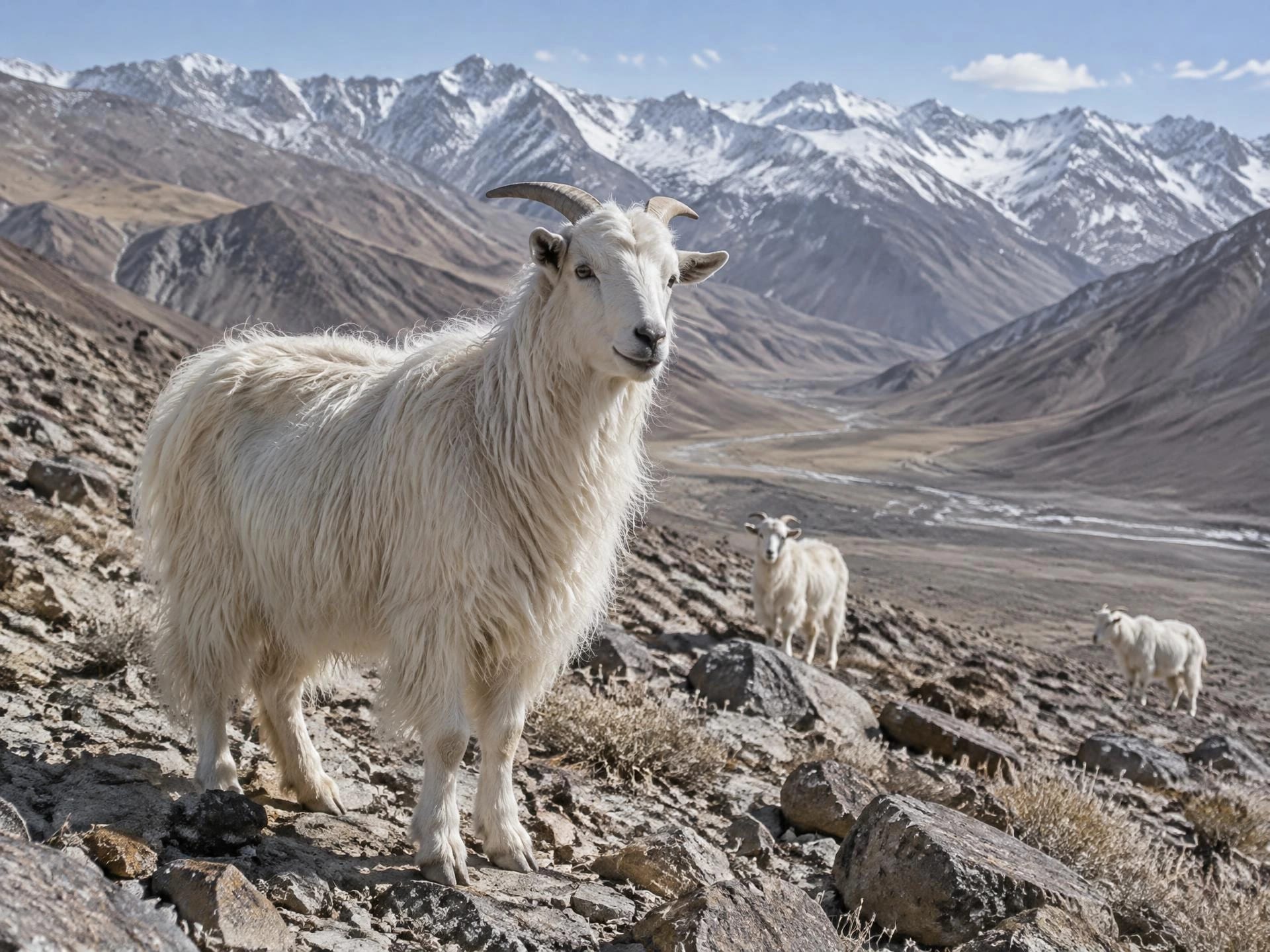
It Starts in Ladakh.
Pashmina comes from the Changthangi goat, which grows a very fine undercoat to survive winters on the Changthang plateau. Each fibre is roughly 12 to 16 microns across, which is what makes the finished cloth so light and warm.
01
Combing
In spring, herders on the Changthang plateau of Ladakh comb the fine winter undercoat from their Changthangi goats by hand.
02
Sorting and cleaning
The coarse outer hair is separated from the soft down, and the fibre is cleaned of dust and grease.
03
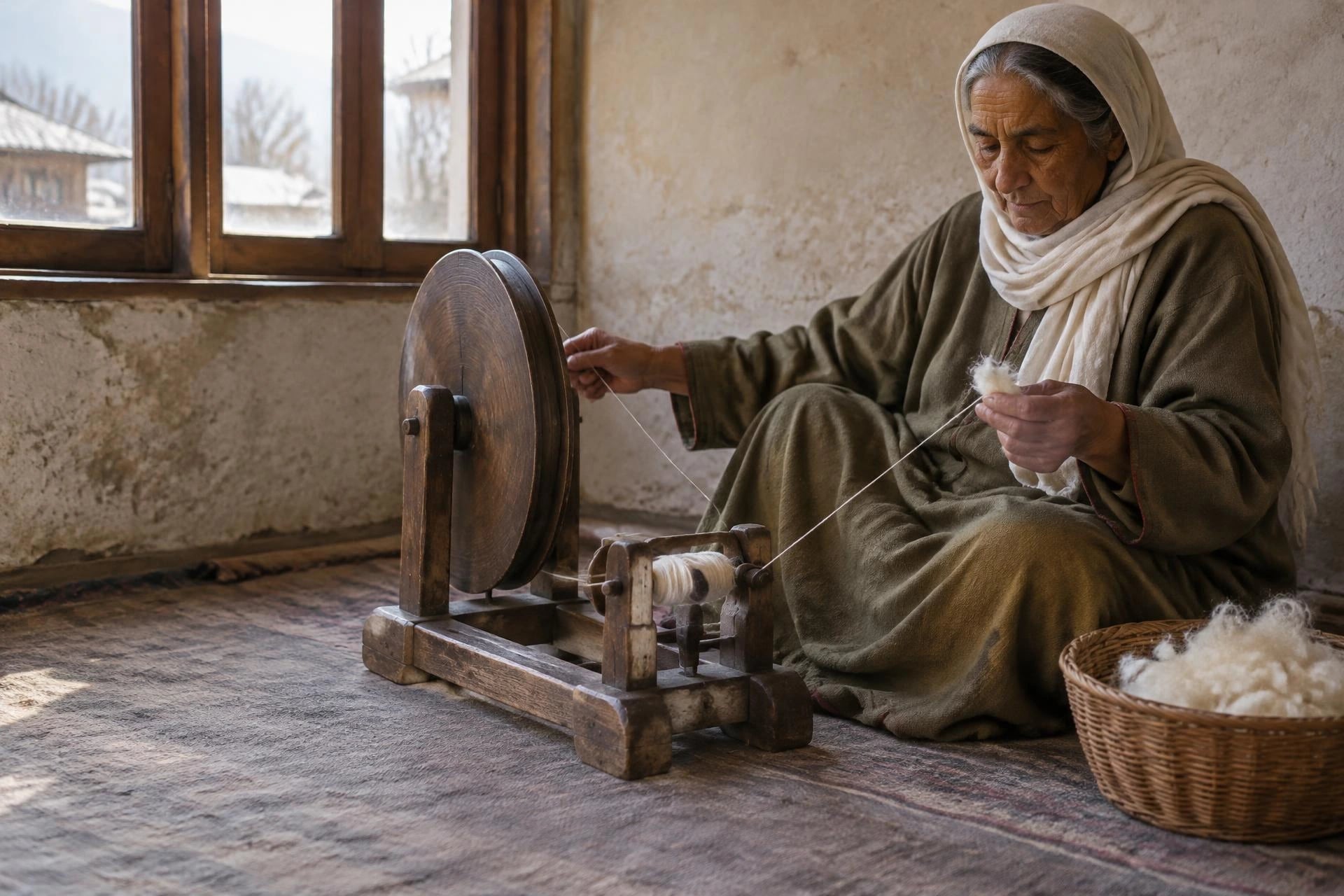
Spinning
The down is spun into yarn so fine that it breaks easily. Spinning by hand on a wooden wheel, called a yinder, is a skill passed down within families.
04
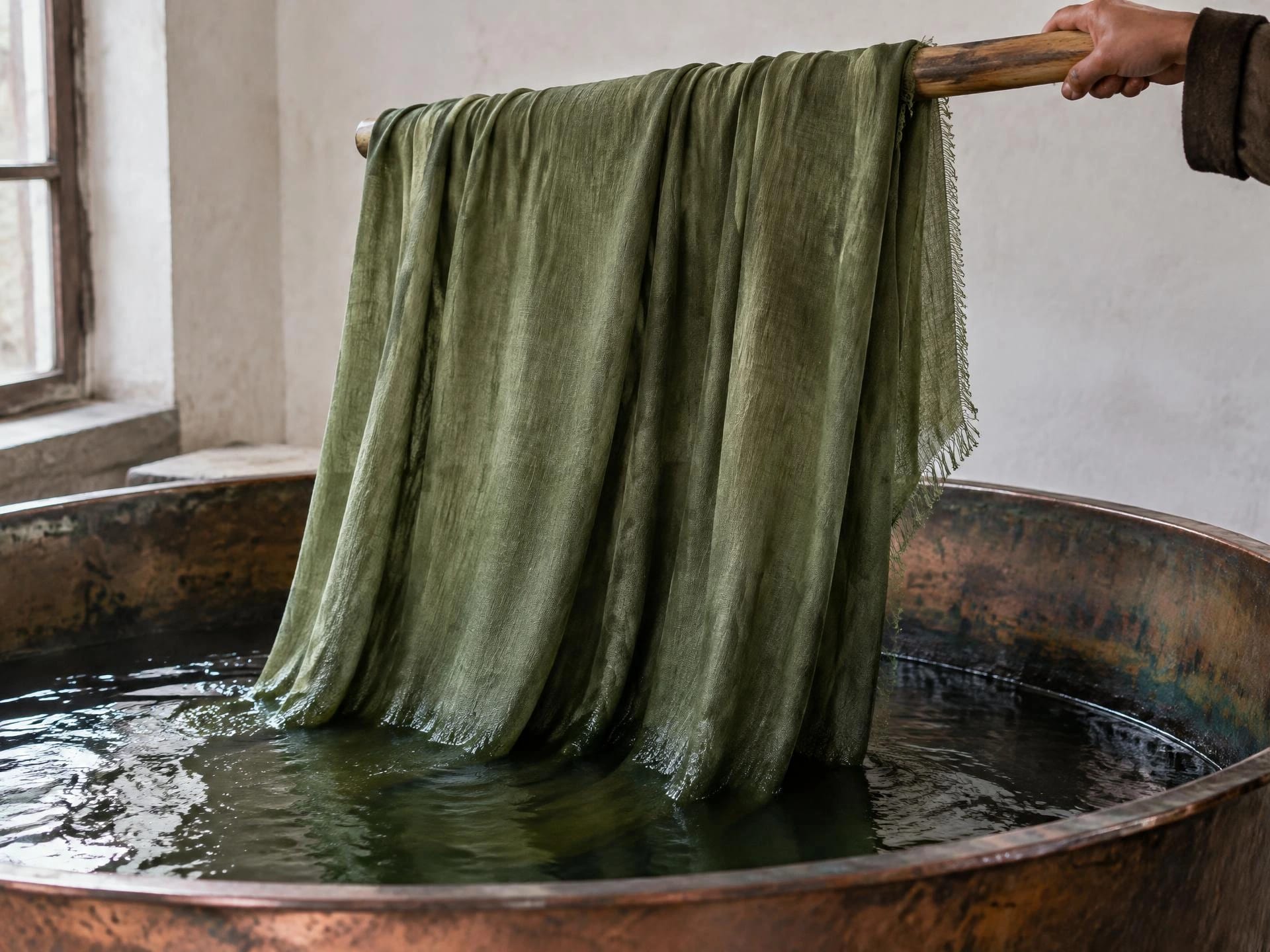
Dyeing
Yarn, or the finished cloth, is dyed in small batches by Kashmiri dyers.
05
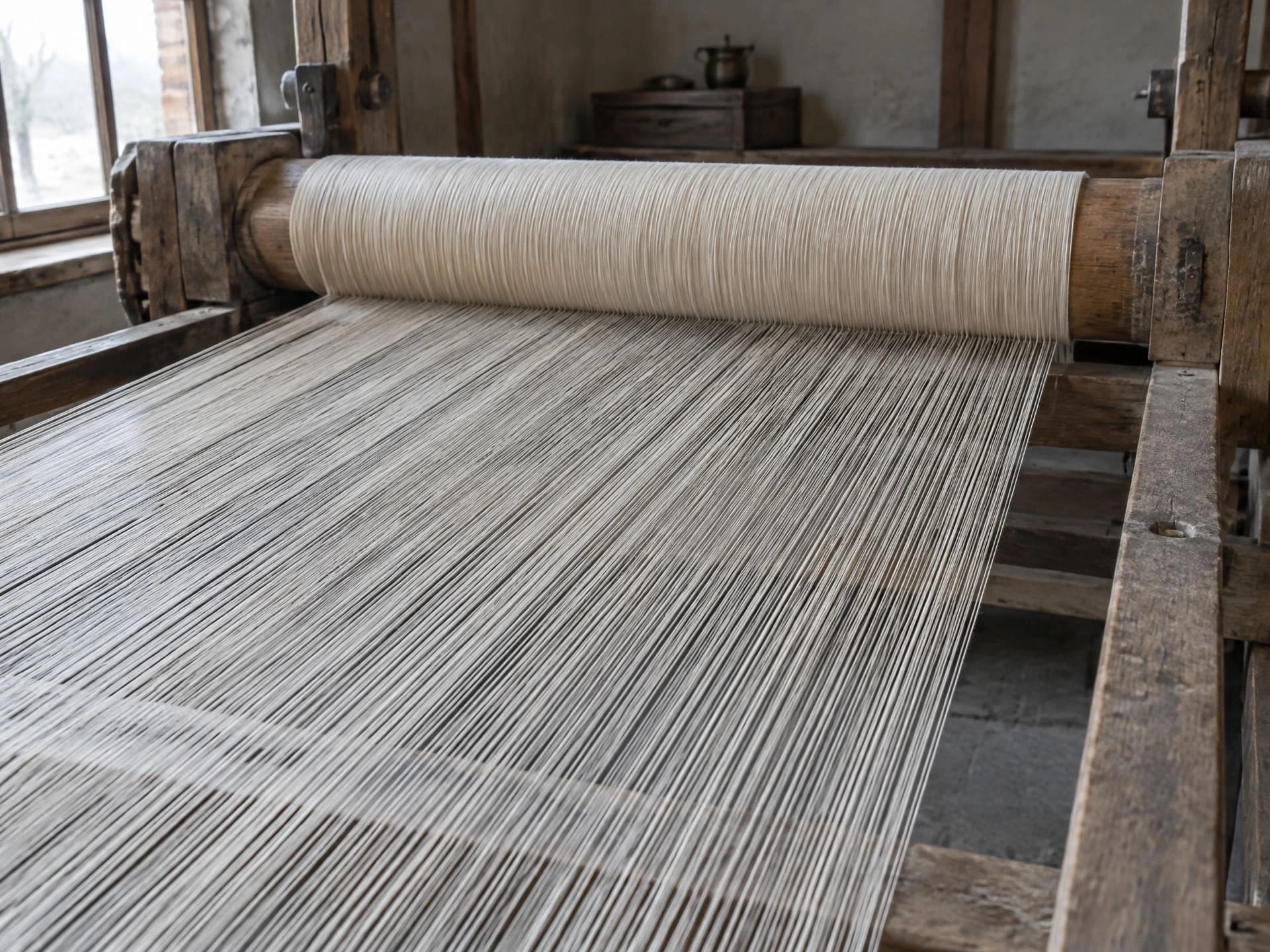
Setting the loom
Thousands of warp threads are laid out and fixed under even tension on a wooden handloom. Every later step depends on this.
06
Weaving
A plain weave or a twill makes the base cloth of a solid or a Sozni piece. In Kani, the pattern is woven in at the same time, with small bobbins following a coded talim.
07
Embroidery
For Sozni, an embroiderer works the design by hand with a fine needle onto the woven Pashmina — often over many months.
08
Washing and finishing
The cloth is washed, its fringes are knotted, and it is gently pressed and inspected.
Colour
A Palette from the Valley.
Kashmiri shawls draw their colours from the valley: walnut, saffron, winter ivory and the green of chinar shade. In Kani, each of these colours is carried by its own bobbin.
Time
Why Handmade Takes Months.
A plain solid can be woven in weeks. A Sozni piece may need months of embroidery after weaving, and a fully patterned Kani shawl can stay on the loom for many months or more.
That time is visible in the finished piece — and it is why genuine work is costly.