
A Plain Guide
What Pashmina Is.
One fibre, from one animal, finished by hand in one valley — and the three ways we make it into a shawl.
The Material
Pashmina, Plainly.
Pashmina is the finest grade of cashmere: the winter undercoat of the Changthangi goat of Ladakh. In Kashmir it is cleaned, spun, woven and finished by hand into shawls, stoles and wraps. The word is widely misused, so it is worth knowing what it really means.
01
Where it comes from
Pashmina is the soft undercoat that the Changthangi goat grows against the winters of the Changthang plateau in Ladakh, more than 4,000 metres above sea level. Herders comb it out by hand in spring, when the goats moult.
02
How fine it is
A Pashmina fibre is roughly 12 to 16 microns across — about a sixth of a human hair. The finer the fibre, the lighter, softer and warmer the cloth.
03
Pashmina and cashmere
Pashmina is a type of cashmere: both are goat undercoat. Pashmina is the finest grade, from one breed in one region, and it is traditionally spun and woven by hand in Kashmir. Most cashmere sold worldwide is coarser and machine-made.
04
Pure or blended
Much of what is sold as “pashmina” is a blend with silk, wool or viscose, and some contains none at all. Everything House of Kani sells is 100% pure Pashmina, and we say so on every piece.
05
Why prices vary
The price of a shawl follows its fibre, its fineness and above all its making. A plain solid may take weeks; a hand-embroidered Sozni, months; a fully woven Kani, many months or longer. A low price for an elaborate piece is a warning sign.
The Making
One fibre. Three ways of making.
Our name honours Kani, the most demanding of Kashmir’s weaves. Our collection also includes hand-embroidered Sozni and fine solids, all in 100% pure Pashmina.
01 · Kani
Pattern Woven Into the Cloth.
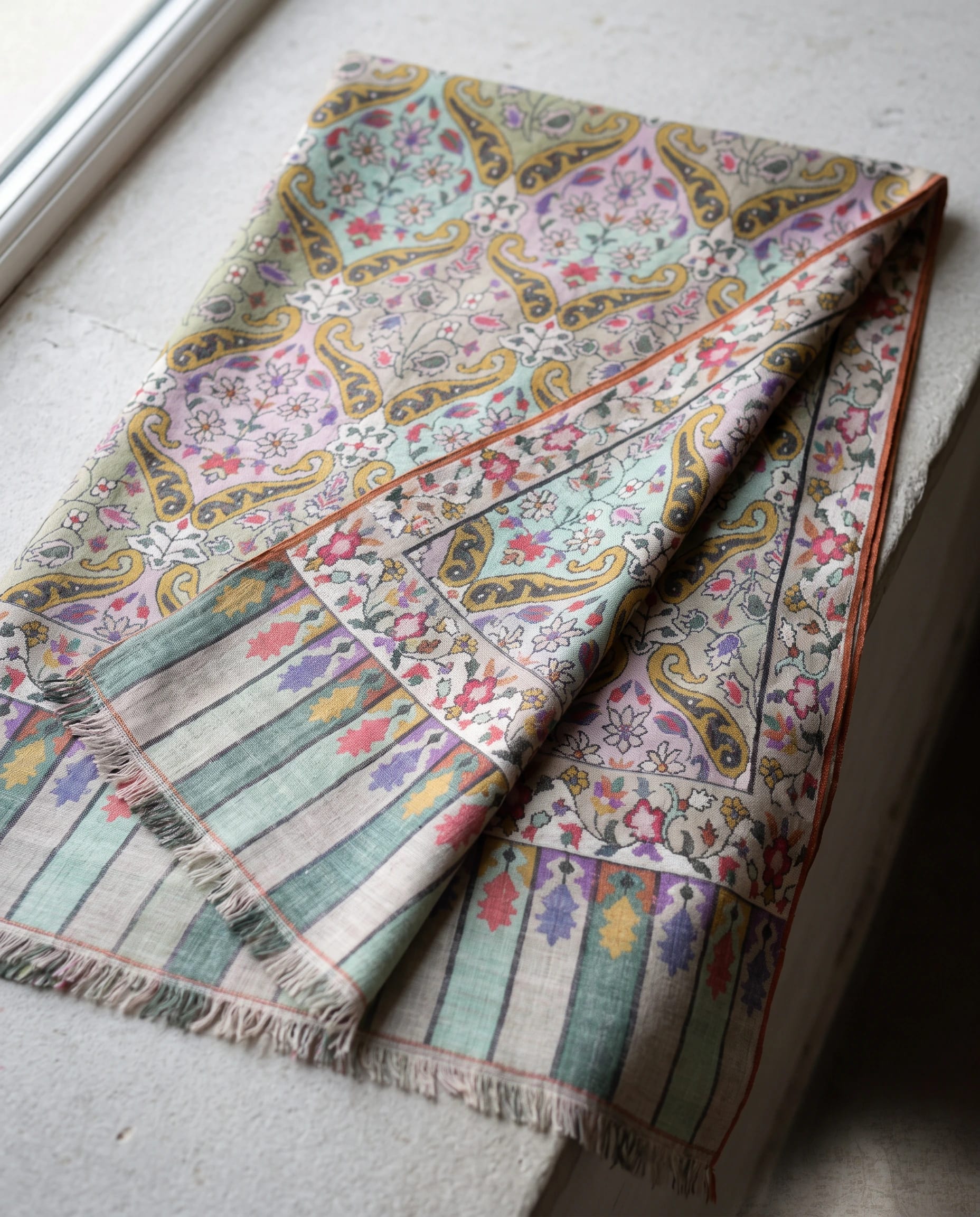
In Kani, the pattern is made during weaving. The weaver passes small wooden bobbins (kanis), each carrying one colour, through the warp, following a coded pattern sheet called a talim.
Because every motif is built thread by thread, a large Kani shawl can stay on the loom for many months.
02 · Sozni
Embroidered by Needle.
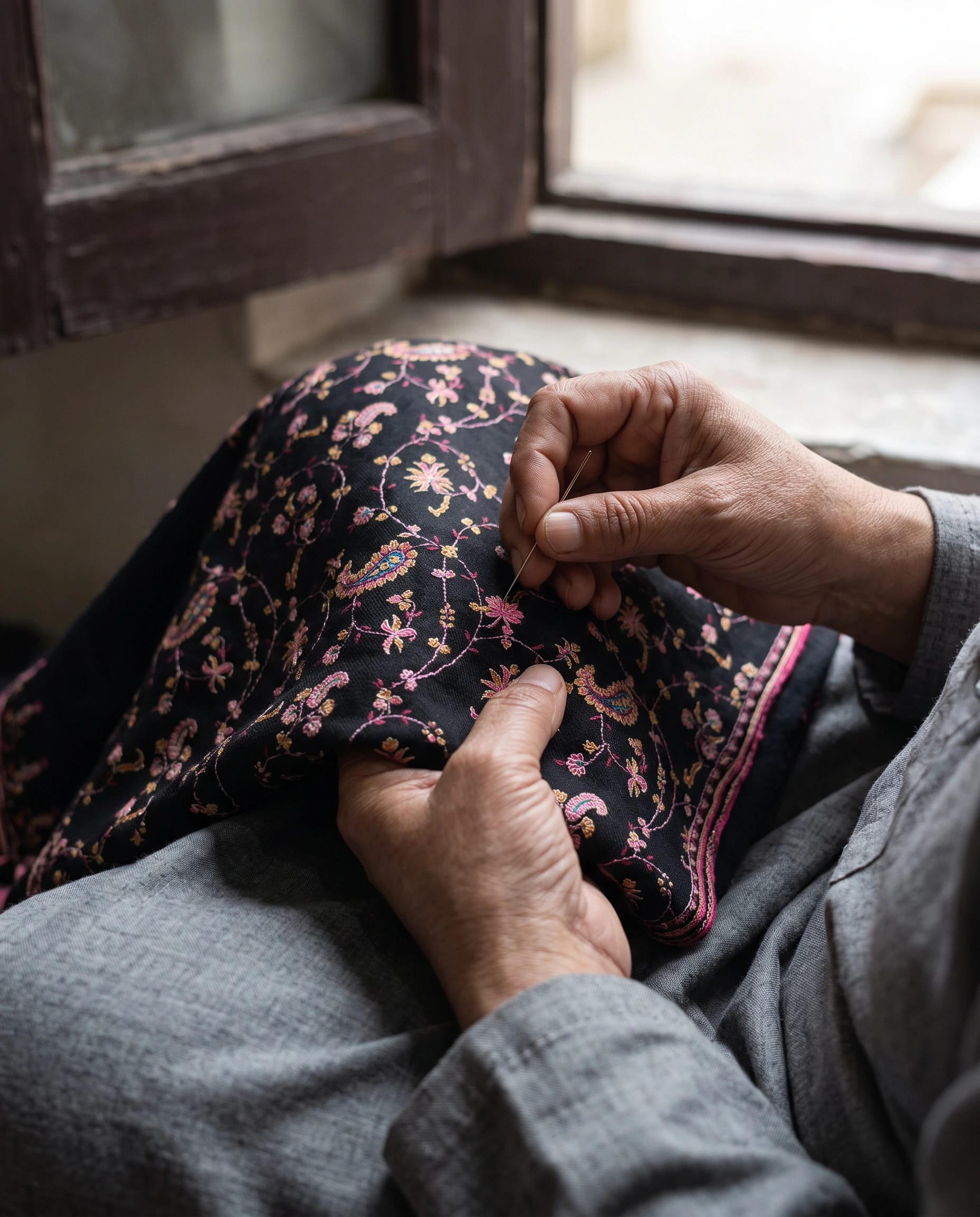
Sozni is hand embroidery worked with a fine needle on woven Pashmina. It can be a narrow border, scattered motifs or a surface covered edge to edge.
The finest needlework, known in Kashmir as maheen kari (“fine work”), uses very thin thread and tiny stitches. A densely worked piece can take months to complete.
03 · Solids
Plain, Unpatterned Pashmina.
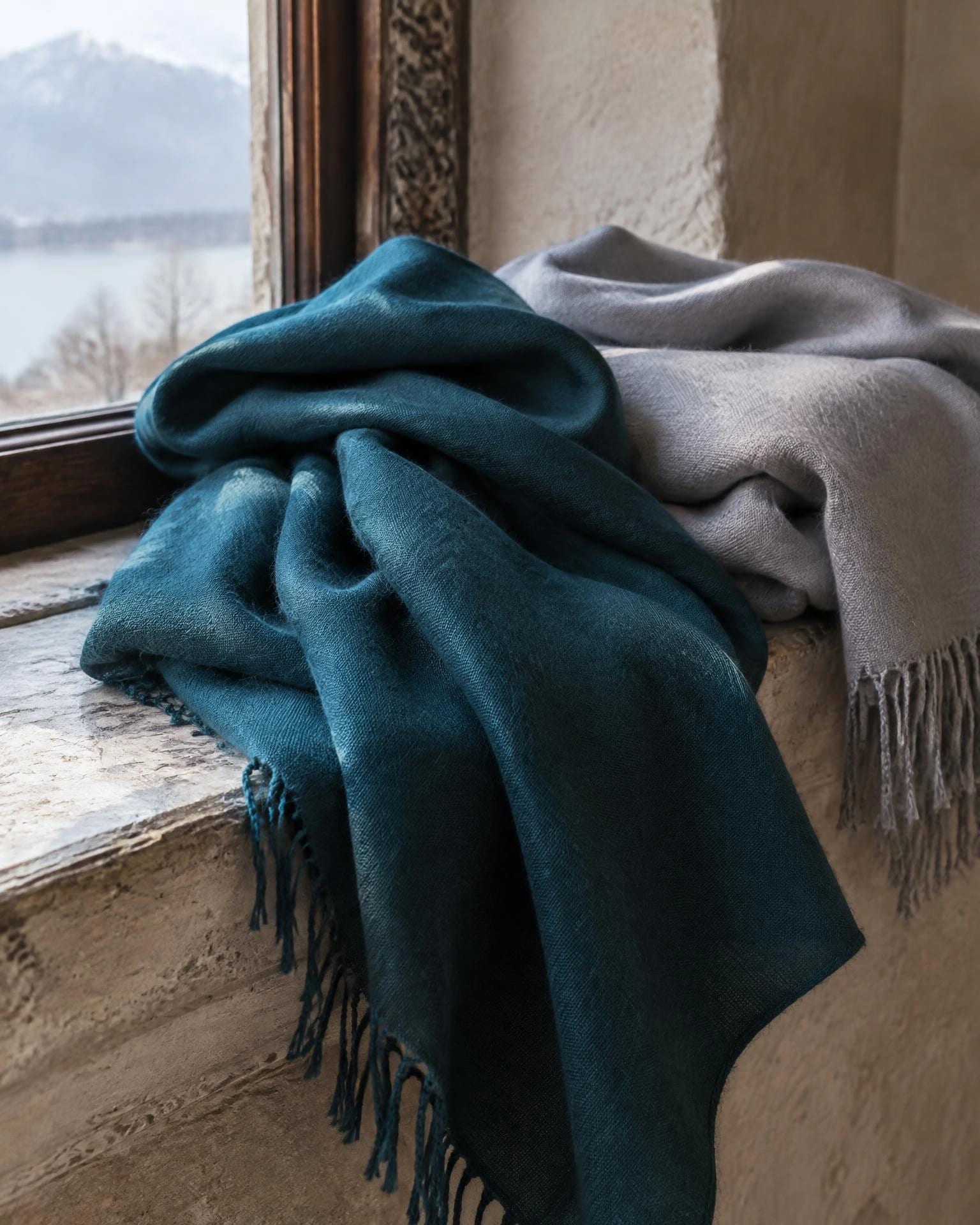
A solid has no woven pattern or embroidery. With nothing to distract the eye, the fineness of the fibre, the evenness of the weave and the depth of the colour are what you see and feel.
Our solids include single colours, reversible two-tone pieces and quiet checks.
Authenticity and GI
How to Recognise Pure Pashmina.
No single test is perfect, but together these checks will tell you a great deal. With every House of Kani piece, we state the technique, the fibre and the size, and we arrange GI certification on request.
I
Ask for the composition
A genuine seller states the fibre plainly. “Pashmina feel” or “cashmere blend” means it is not pure Pashmina.
II
Look at the reverse
Hand embroidery shows small, slightly uneven stitches on the back. In hand-woven Kani, the reverse shows the colour changes of the weft. Machine work is perfectly regular on both sides.
III
Feel the weight and warmth
Pure Pashmina is very light for its size and warms quickly against the skin. It feels soft and slightly matte, not slippery or shiny.
IV
Ask about GI certification
Kashmir Pashmina, Kani shawls and Sozni embroidery are registered Geographical Indications in India. A GI label is issued in Srinagar after the piece is tested, and carries a unique code.
Care
Looking After a Pashmina.
Cared for properly, a pure Pashmina lasts for decades.
Clean
Dry clean only
Use a dry cleaner who handles fine wool. Do not machine-wash or wring a Pashmina.
Store
Fold, don’t hang
Store it folded in a cotton or muslin cover, away from direct sun. Cedar or neem helps keep moths away.
Wear
Let it rest
Air it between wears, and put on perfume before the shawl rather than onto it. Lift small pills away gently by hand.