
Heritage
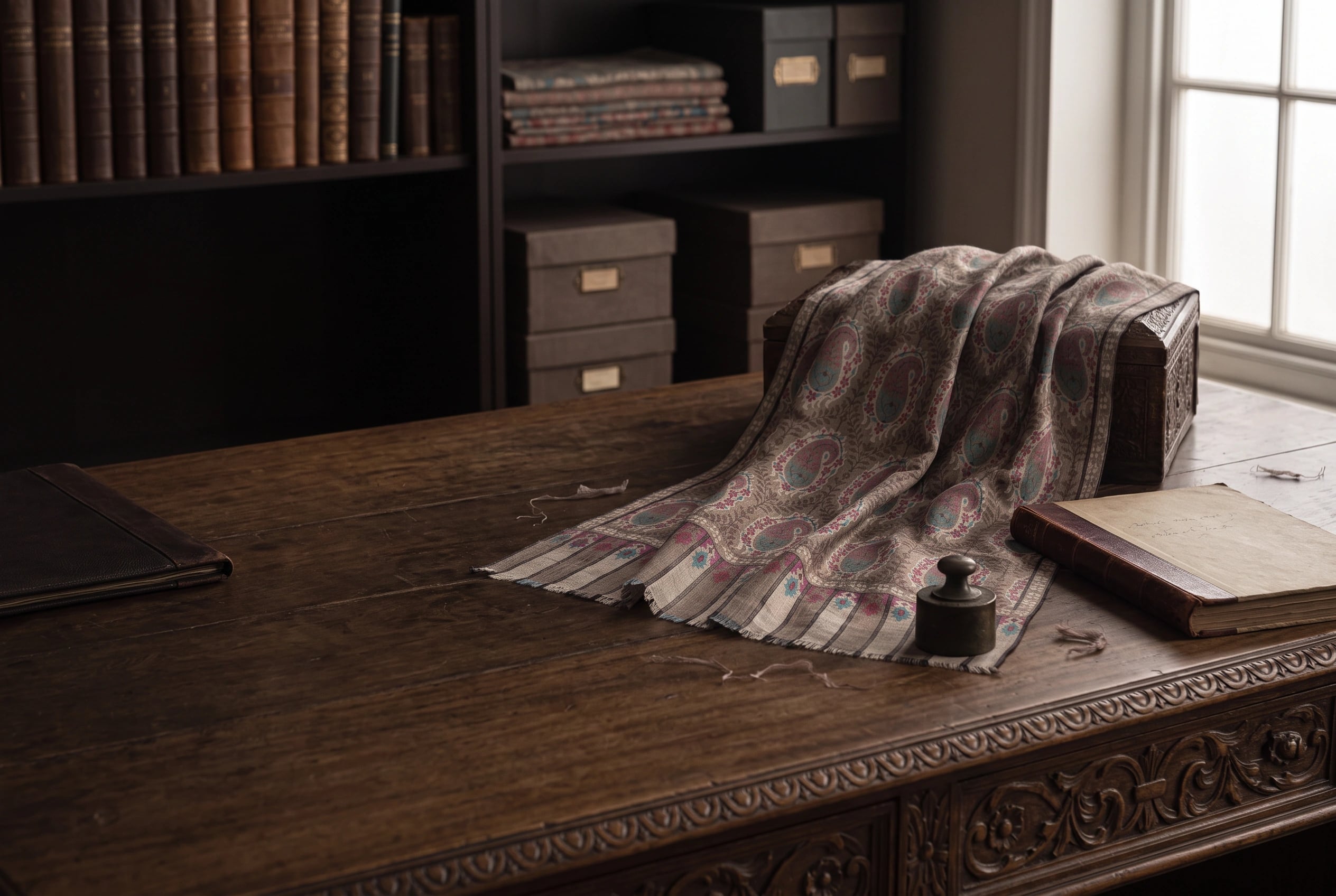
Six Centuries of the Kashmir Shawl.
How Pashmina weaving, Kani and Sozni grew in the valley — and travelled the world.
A Short History
15th century
Origins
Kashmiri tradition credits Sultan Zain-ul-Abidin with encouraging weavers and craftsmen from Persia and Central Asia to settle in the valley. Shawl weaving grew into one of Kashmir’s central crafts.
16th–18th century
Courts
Under Mughal rule the Kashmir shawl became a prized gift at court. Woven Kani patterns grew more elaborate, and the paisley-like boteh became their best-known motif.
18th–19th century
The wider world
Kashmir shawls reached Europe and became fashionable there. Imitations followed, most famously from the mills of Paisley in Scotland, which gave the motif its English name.
19th century onward
Needlework
As woven Kani became costly, embroidered shawls grew in importance. Sozni — fine needlework on plain Pashmina — became a tradition of its own.
The present
Today
Spinners, weavers and embroiderers still work in Kashmir. Kashmir Pashmina, Kani shawls and Sozni embroidery are now protected as Geographical Indications in India.
The Valley
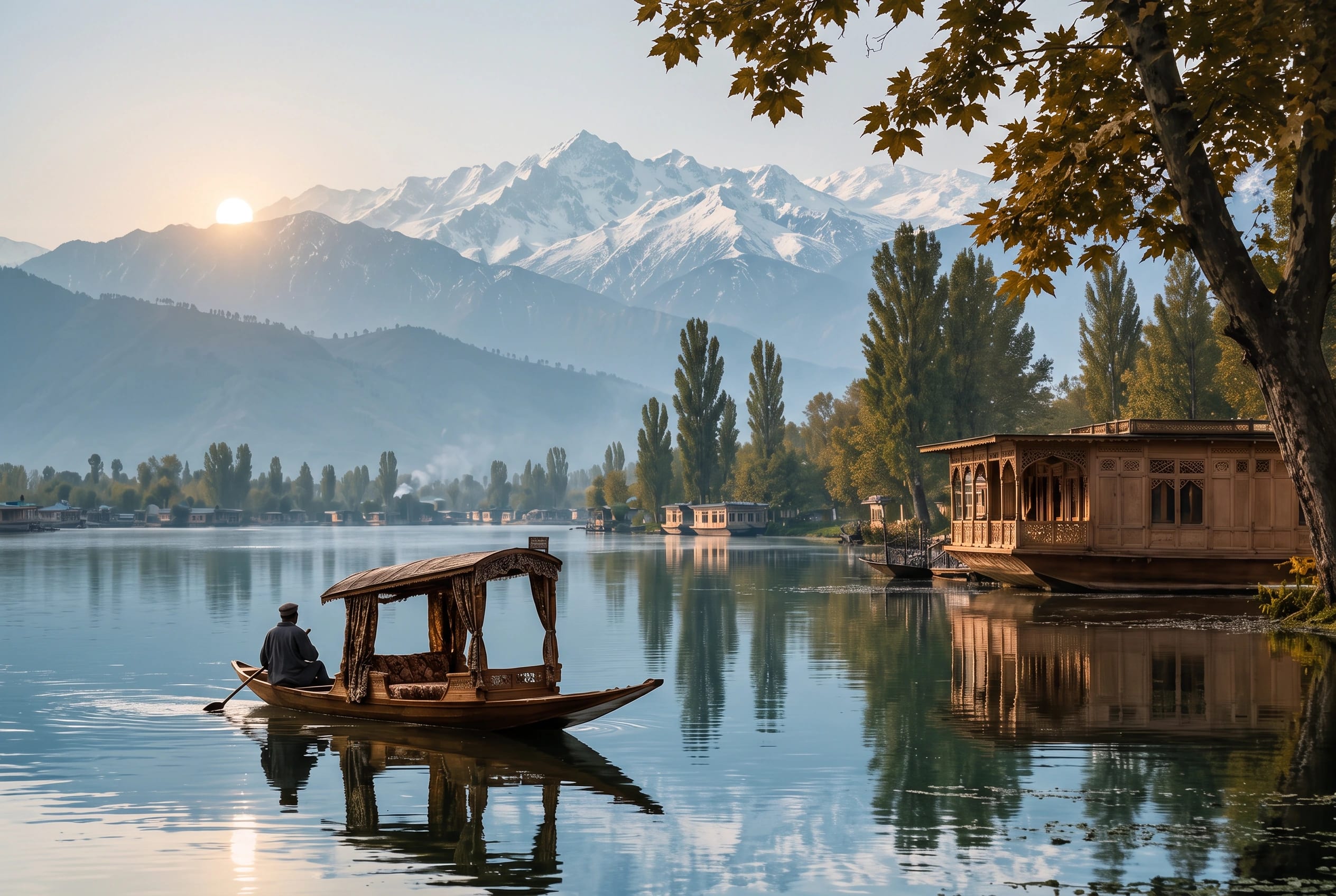
A Culture Woven into Place.
Kashmir’s history resides in gardens and manuscripts, carved wood and spoken verse — and in textiles whose borders hold whole imagined landscapes.
The Motif
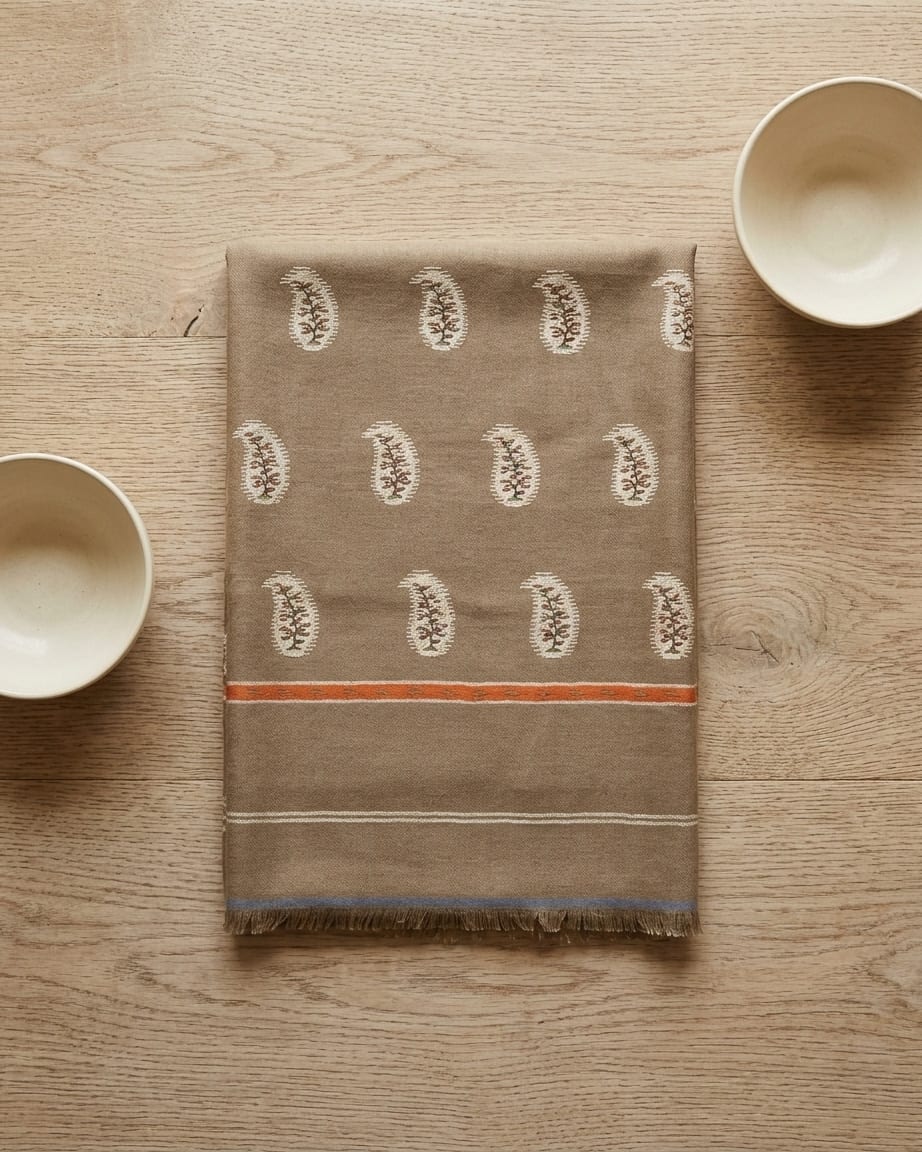
The Boteh, Known Abroad as Paisley.
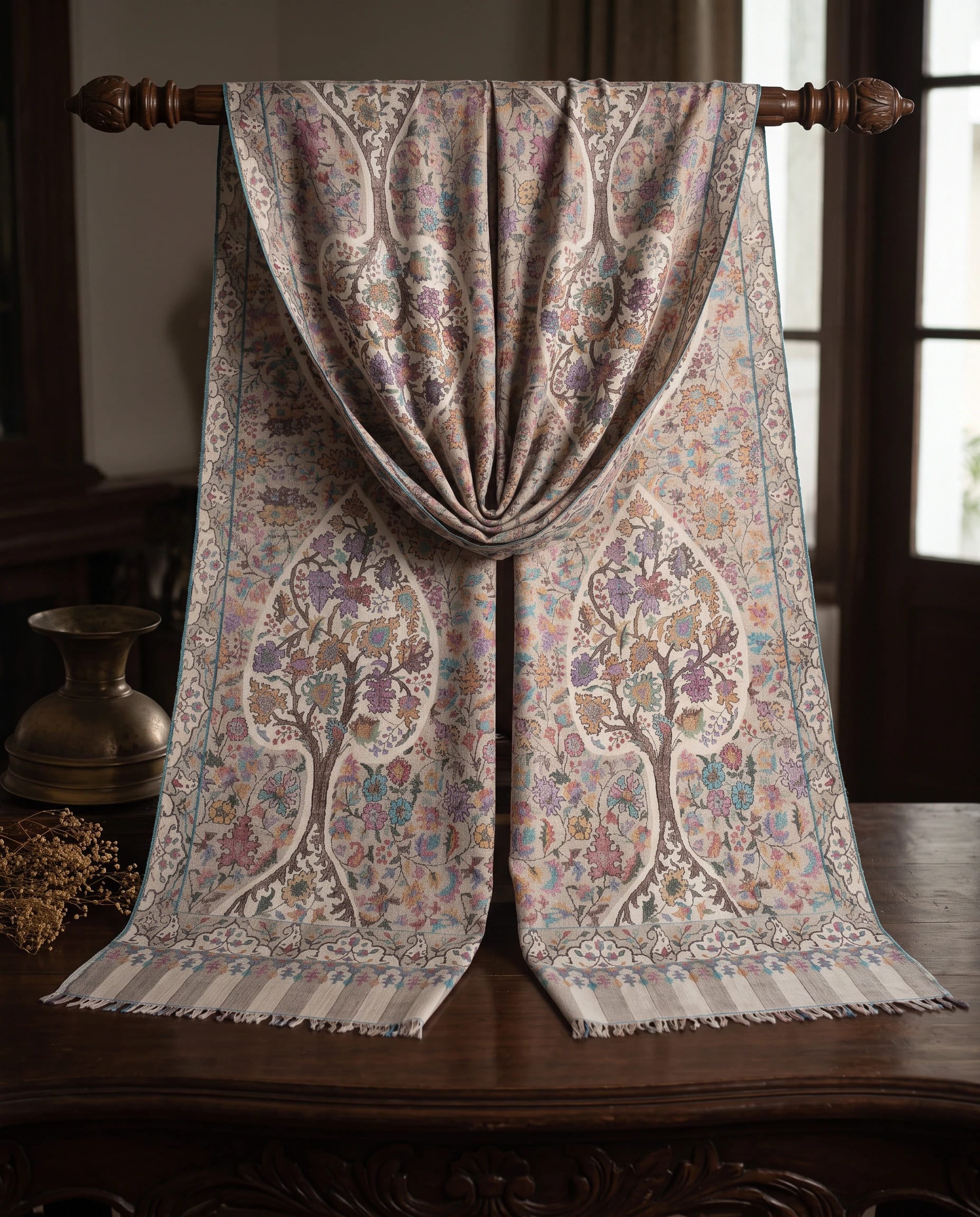
The curved teardrop motif that Europe came to call paisley is the Kashmiri boteh. Weavers have drawn it as a leaf, a flame and a cypress bent by the wind, and it remains at the heart of Kani design.
Heritage is not what we keep behind glass. It is what we understand well enough to carry forward.
Our Part
Four Generations in This Story.
Our family has worked in Pashmina for four generations. Today we weave on our own looms and work with Kashmiri artisans we trust, so that this history continues as practice.