Pashmina · 10 min read
What a Real Pashmina Costs, and Where the Money Goes
Why a genuine Pashmina costs what it does: the fleece, the spinning, the loom, the needle and the certificate, and how to read a price that seems too low.
By Timothy V. Manley
3 November 2026
There is no single price for a real Pashmina. Two shawls of similar size can sit at opposite ends of the market, and both can be genuine. Four variables explain almost all of that difference: the fibre, the technique, the size and the time.
A price summarises decisions made long before the shawl reaches a shelf. Which animal grew the fleece, who spun it, how long the loom was occupied, how many hours a needle spent on the border: these are the real components. That makes a price legible and a suspicious one easier to recognise.
Fibre sets the floor, labour sets the ceiling, and certification adds a cost no genuine piece can avoid. A very low price is not a bargain; it is evidence about what went into the piece.
The fibre sets the floor
The fibre behind a Pashmina shawl begins as the undercoat of the Changthangi goat, kept high on the Changthang plateau in Ladakh. The down grows beneath a coarse outer coat to hold warmth through a Himalayan winter. In spring, herders comb it out by hand as the goat begins to shed.
Kashmir Pashmina's registered specification sets the legal boundary. It requires 100% pashm, caps fibre diameter at 16 microns, and specifies hand-spun yarn and handweaving in Jammu and Kashmir. The IP India record for GI No. 46 and the Craft Development Institute's GI specifications are the documents to check.
Each animal yields a small annual clip, so several goats are needed for a large shawl. Hand-combing is selective and leaves the guard hair; machine dehairing is faster and handles fibre from many sources. Fibre is the first cost because it is decided before any labour is spent.
Spinning is slow by design
Spinning turns a cloud of down into a yarn strong enough for a loom. By hand, it is a sequence of drawing, twisting and winding that cannot be rushed without producing thin spots, slubs or a yarn that breaks under tension. The spinner works with the fibre's staple length, not against it.
The Kashmir Pashmina GI requires hand-spun yarn, and that requirement is not decorative. Hand-spinning lets the spinner control twist along the length of the yarn and keep the long fibres aligned. Machine spinning is quicker and more uniform, and handles shorter or blended fibres that hand-spinning would reject. Both can produce good yarn; only one is inside the GI specification.
We do not publish an hour count for spinning, because published figures are inconsistent and rarely traceable to a workshop. The work is measured in days and weeks, and the finest yarns are slowest. Spinners are usually paid by weight or by the piece, at a rate that reflects the pace of fine work.
Weaving: the loom sets the calendar
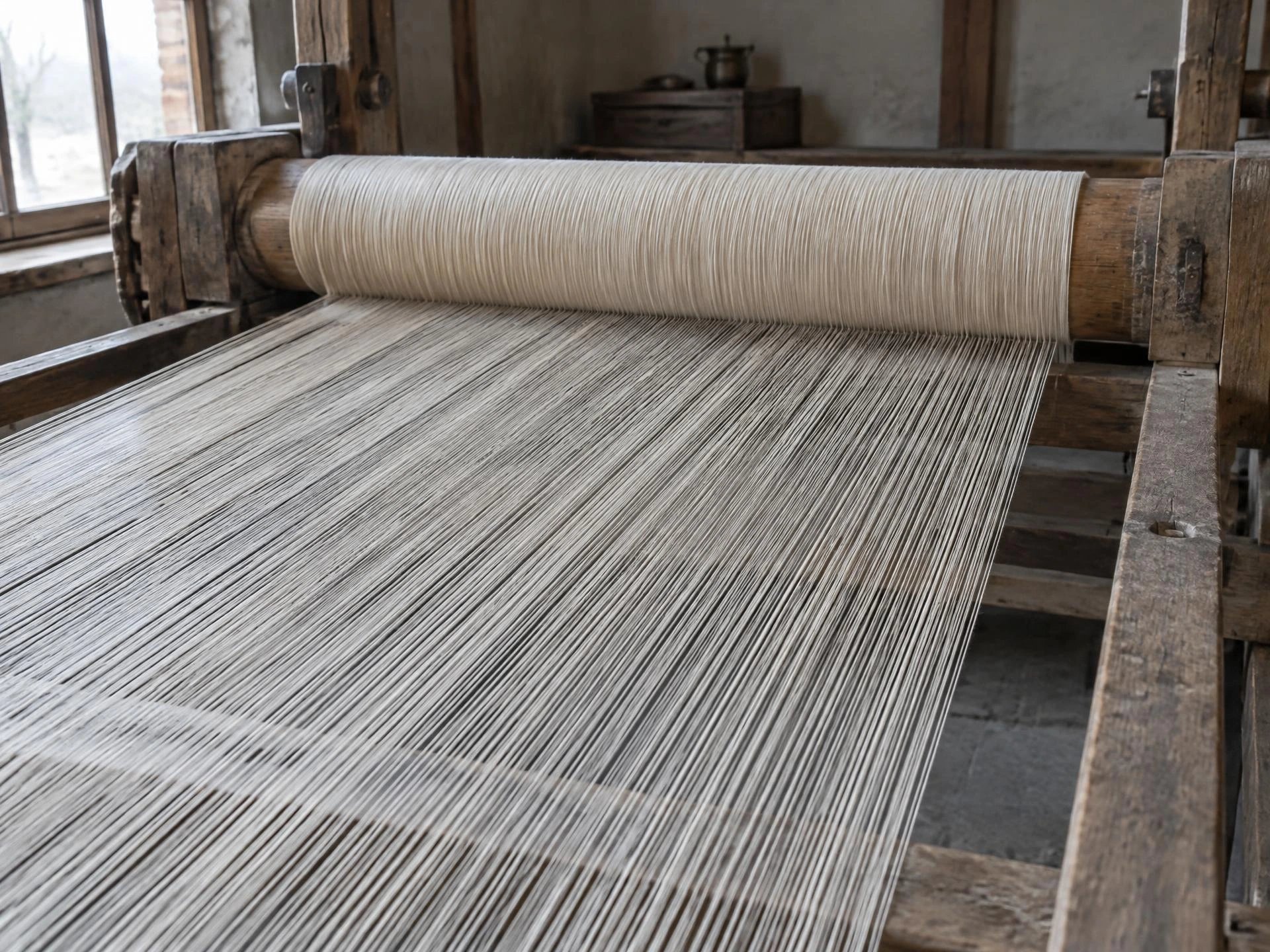
A plain solid is the simplest expression of the craft. The loom is dressed with a warp, the weft passes in a single colour, and the interest comes from the fineness of the yarn, the evenness of the weave and the finish. A skilled weaver can complete a solid stole in weeks, and a large shawl in somewhat longer.
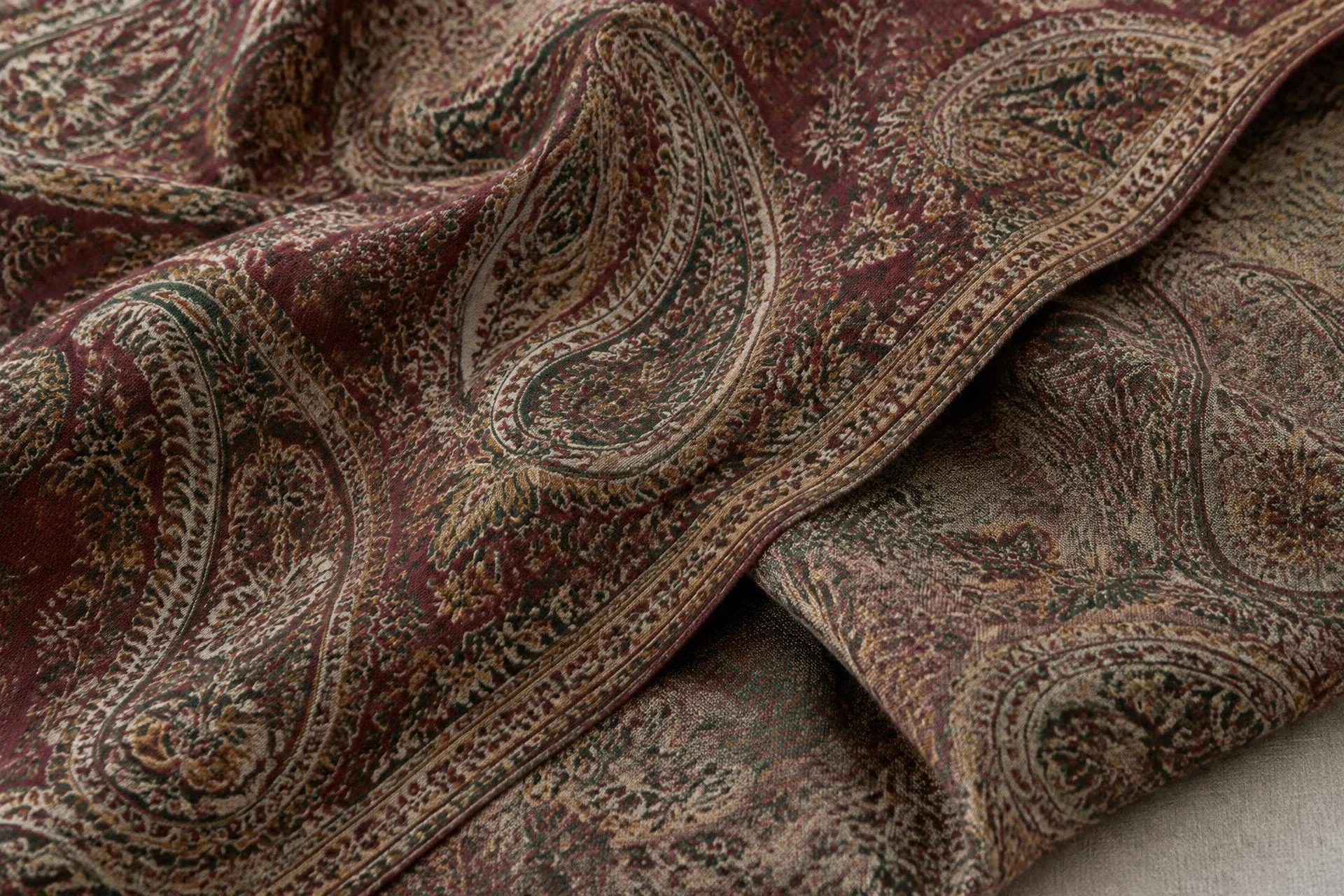
Kani is a different order of work. The pattern is not printed or embroidered afterwards; it is woven in. Each colour sits in a small wooden bobbin, a kani, and the weaver follows a talim, a coded pattern sheet, placing each colour where the design requires it. The wefts interlock at the edges of every motif, so the reverse carries the record of the pattern.
A densely patterned Kani can occupy a weaver for eighteen months to two years. The loom cannot be hurried through a difficult passage, and an error may have to be unwoven. The Craft Development Institute's Kani specification describes handweaving with kanis or tujlis in twill tapestry, and the Kani pages show the structure. Loom time is the largest single cost in a Kani.
A densely patterned Kani is not expensive because it is rare; it is rare because it is slow.
Embroidery is the second labour bill
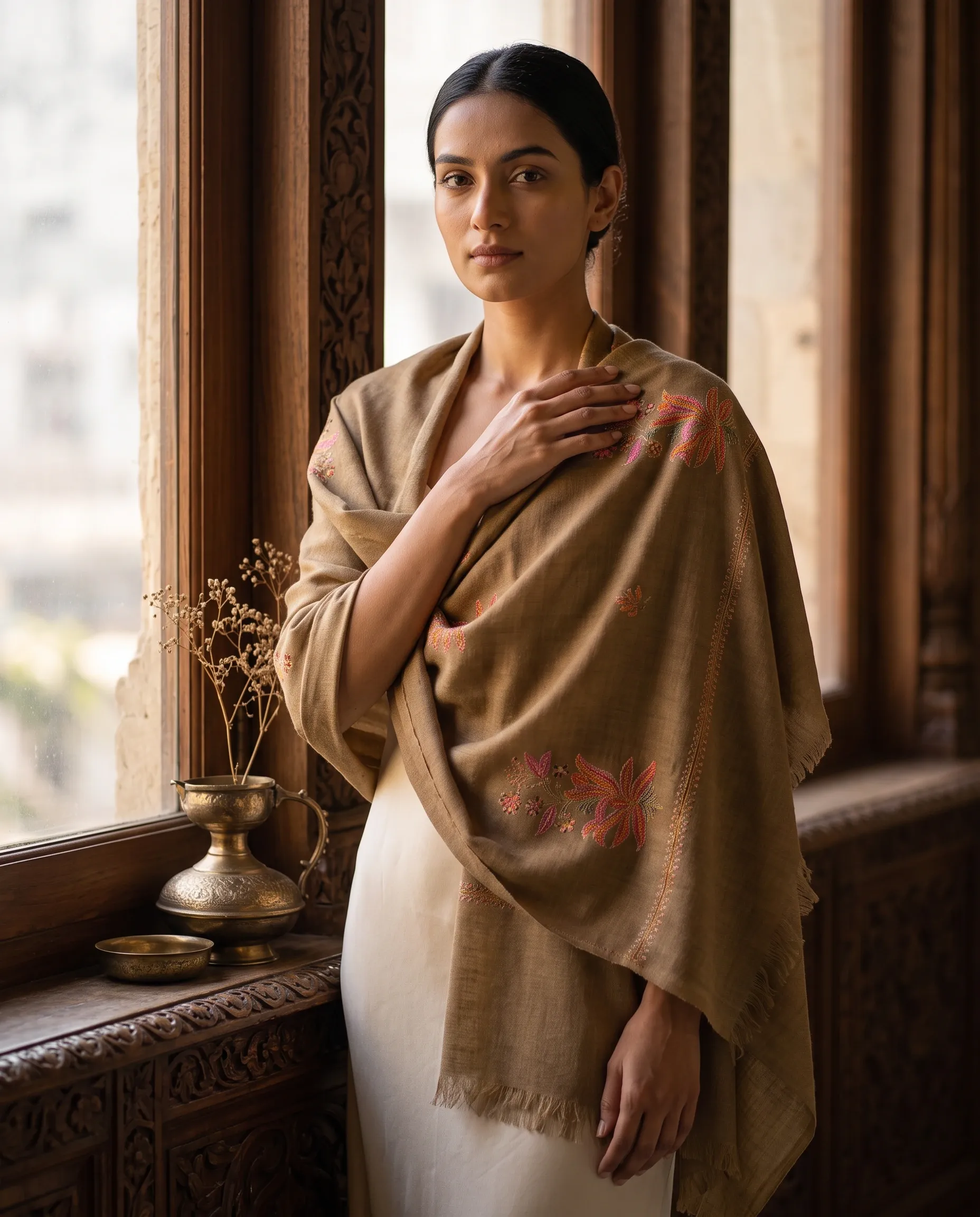
Sozni is needlework on woven cloth. The shawl is made first, then an embroiderer works the design onto its surface with a fine needle. It is a separate craft with its own GI, No. 48, and a separate labour cost.
The range within Sozni is wide. A border or a scattering of small motifs takes far less time than an all-over jaal that covers the field. Maheen kari, the finest grade, uses minute stitches and a very fine needle; it demands good light, steady eyes and patience at a scale where progress is measured in centimetres.
A substantial composition can take months of needlework. The embroiderer is not filling in a printed outline; the design is marked or held in the mind, and stitch density determines the effect. After Kani weaving, embroidery is usually the largest single labour cost, because it sits on an already finished shawl.
Finishing, testing and certification
A woven and embroidered piece is not yet ready to sell. It is washed, pressed, checked for pulls or thin places, and finished at the edges. Any fringe is twisted by hand, and washing is a skilled step: the wrong water or handling can shrink the cloth, dull a colour or alter the hand of the fibre.
Testing happens in Srinagar. The Craft Development Institute publishes the specifications and the testing process, and a GI label is issued after a piece is tested, carrying a unique code. The Directorate of Handicrafts is the state department that supports training and certification.
The cost of getting certification wrong is not only the fee. A batch that fails a test may need to be reworked, re-labelled or sold outside the certified market, and a false claim is a legal risk as well as a reputational one. Certification is arranged on request, so its cost is built into the pieces that carry it.
What the retail price is made of
Fibre is the first line, and its share is highest in a simple solid. Labour is usually the largest line, because spinning, weaving, embroidery and finishing are separate skills, often practised by separate people. In a Kani, fibre is small beside the weaving; in a heavily embroidered Sozni, the needlework can outweigh the cloth.
Certification, transport, duties and insurance sit on top. A shawl may cross several borders; each crossing has a cost and a delay. Packaging, storage and returns are smaller but not zero.
The seller's margin is the last line. It has to cover the pieces that do not sell, the samples kept for reference and the time spent answering enquiries. A margin is not greed; a business without one cannot keep buying fibre or paying weavers. A very low price is evidence, not a bargain.
The tiers, and why we quote per piece
We do not publish price ranges, because the ones we have seen cannot be traced to actual transactions across all four tiers. Prices vary by city, season, maker and relationship. A number copied from a blog post is a rumour with a currency symbol.
The tiers can still be described. A solid stole is the entry point: least fibre, simplest weave, shortest finishing. A solid shawl uses more yarn and a larger loom. A Sozni piece adds months of embroidery. A Kani sits at the top because the pattern is woven in, not added after.
Fineness, size, pattern density and the maker move the figure. These are market tiers, not our prices.
This is why we quote per piece rather than publish a price list. Fibre batches differ, sizes differ, techniques differ, and the time a pattern takes is not knowable until it is costed. A 'from' price anchors the customer to the cheapest piece and starts every other conversation in the wrong place.
At House of Kani, we confirm the price of a specific piece before dispatch. We deliver worldwide, accept returns within 14 days, and ask the customer to pay return shipping. To discuss a piece, enquire about a piece and we will set out the fibre, technique, size and time behind it.
Why cheap pashmina exists
Some cheap shawls are honest. A wool scarf, a viscose wrap or a cashmere blend sold as exactly that can be good value at a low price. The problem begins when pashmina is used as a description of softness rather than a statement of fibre and process.
Blends are the most common route to a lower price. Silk adds shine, wool adds bulk, viscose adds drape, and all reduce the amount of pashm in the piece. Machine spinning and power weaving then cut the labour. The result can be attractive, but it is a different product.
Machine-woven imitations of Kani are widespread. A jacquard loom can reproduce a complex motif at speed, and from a distance the pattern may look close. On the reverse, the structure is regular in a way handwoven Kani is not. The label is where the fraud usually sits.
Mislabelling takes several forms: a blend sold as pure, a machine-made piece sold as handwoven, a generic scarf sold as Kashmiri, or a copied GI label. A cheap shawl is not automatically fraudulent; one sold as something it is not, is.
Five questions that reveal value
Who made it? A seller who can name the workshop, the weaver or the embroiderer offers a chain of accountability. The name need not be famous; it needs to be real.
How long did it take? The answer should separate spinning, weaving, embroidery and finishing. Months is not enough: a piece with months of embroidery differs from one with weeks.
Is it pure pashm, and which GI applies? The fibre question comes first. The answer should name No. 46 for Kashmir Pashmina, No. 51 for Kani or No. 48 for Sozni, and explain how certification is arranged.
What are the return terms? A genuine seller can afford to tell you. Check who pays return shipping, how long you have and whether a piece can be exchanged. Terms that are vague before purchase tend to become vaguer after it.
How will you wear it? A plain solid worn twice a week can be better value than an embroidered shawl that stays in its box. Price is what you pay; value is what the piece does.
Does a higher price always mean a better shawl?
No. Price follows the cost of making, not the quality of the piece alone. A large, heavily embroidered piece can cost more than a simple solid and still be wrong for a daily wrap. Judge the fibre, the weave, the finish and the maker's answers before you judge the number.
Is GI certification included in the price?
Certification is arranged on request and is not automatic. Testing in Srinagar and paperwork add a cost that has to sit in the price. A genuine piece can lack a label, but the label is the part a buyer can verify, so ask which GI applies.
How can two similar shawls differ so much in price?
They may differ in fibre fineness, in whether the yarn was hand-spun, in whether the cloth was handwoven or power-loomed, in embroidery density and in finishing hours. Two pieces can look alike in a photograph and be different objects in the hand. Size, weight and the seller's cost base matter too.
The next time a Pashmina seems expensive, ask what had to happen before it reached the shelf. The answer is usually a fleece from a high plateau, a spinner's patience, a weaver's months and an embroiderer's eyes. That is where the money goes, and why a real piece is worth comparing like with like.