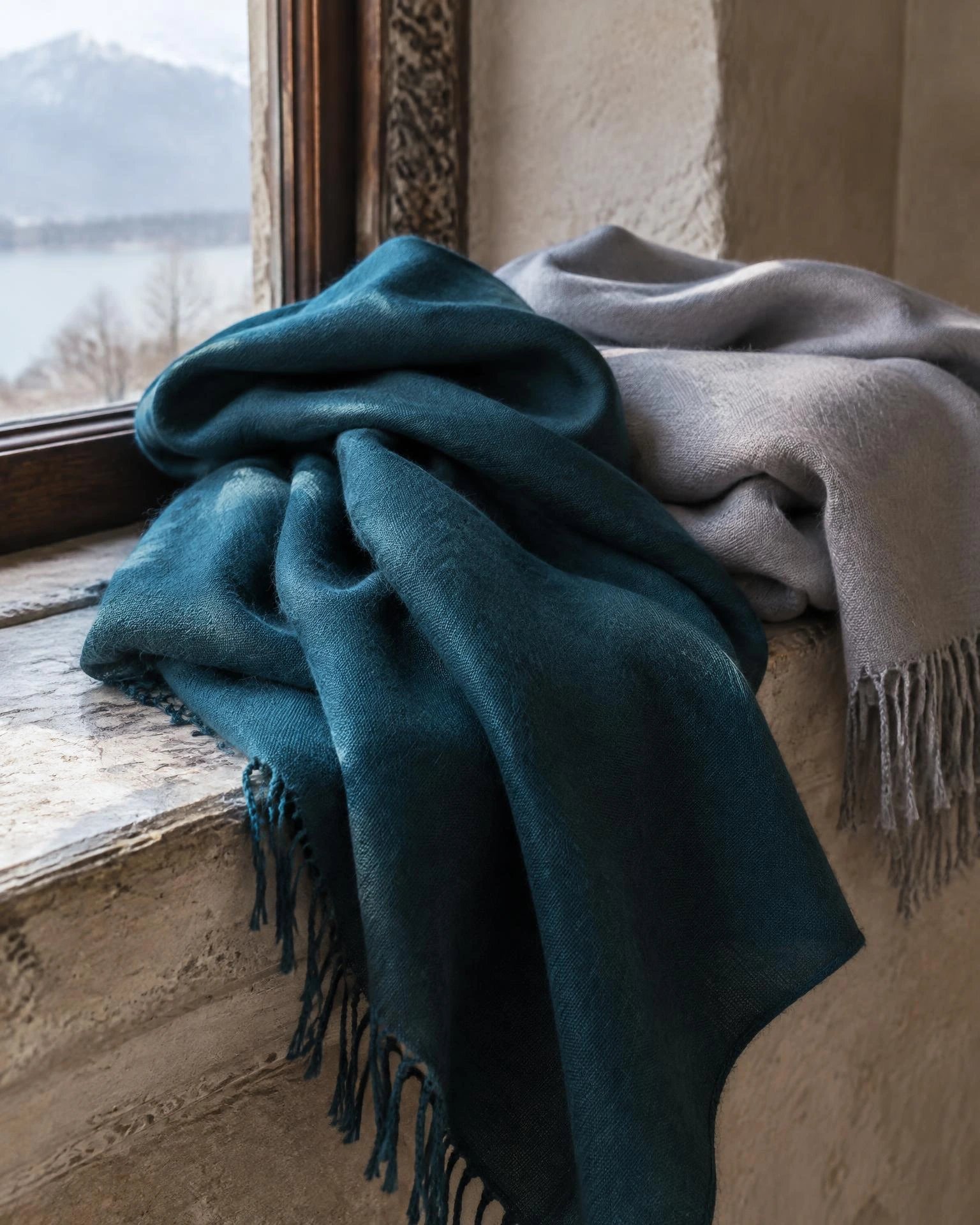
Care · 10 min read
How to Wash a Pashmina Shawl (Without Ruining It)
Cool water, a pH-neutral detergent and a flat drying rack will keep a pure Pashmina shawl soft; heat, rubbing and a normal wash cycle will not.
By Timothy V. Manley
5 November 2026
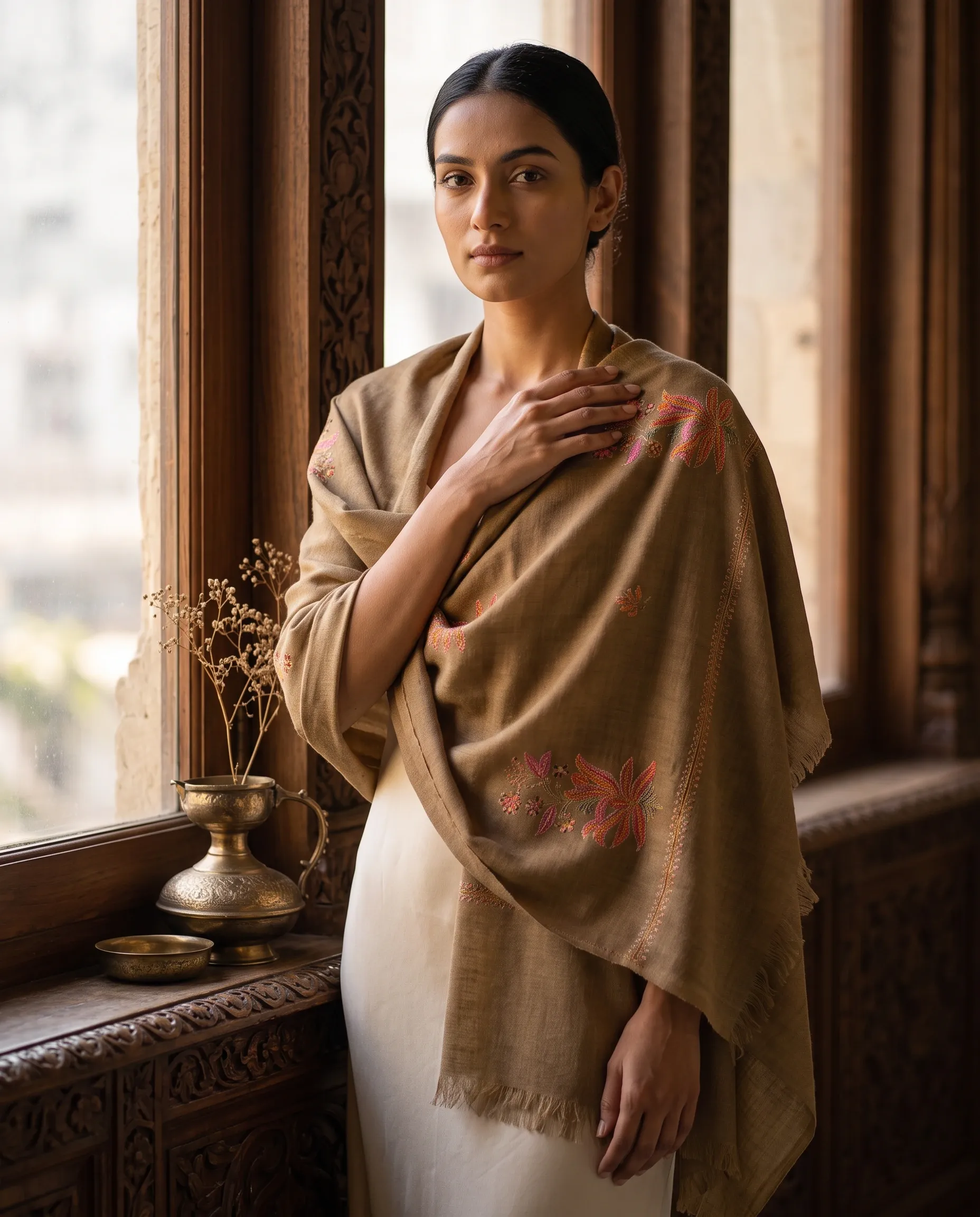
A plain Pashmina shawl can survive a hand wash. It cannot survive being treated like a sweater. The difference is not the soap or the label; it is how the fibre responds to water, heat and movement.
Pure Pashmina is a short, fine fibre spun into a light yarn. Wash it with restraint and it keeps its drape. Wash it briskly and the same qualities that make it soft begin to work against it.
Wash every three or four wears, or at the end of the season. Use water at 30°C or below with a pH-neutral wool detergent. Press, never rub or wring. Dry flat, away from heat, and reshape while damp.
Why Pashmina behaves unlike sheep's wool
Pashmina is an animal fibre, but not the wool most care labels describe. It comes from the undercoat of the Changthangi goat, combed in spring and separated from the coarser guard hair. The fibres are shorter and finer than sheep's wool, so the cloth feels soft and felts readily.
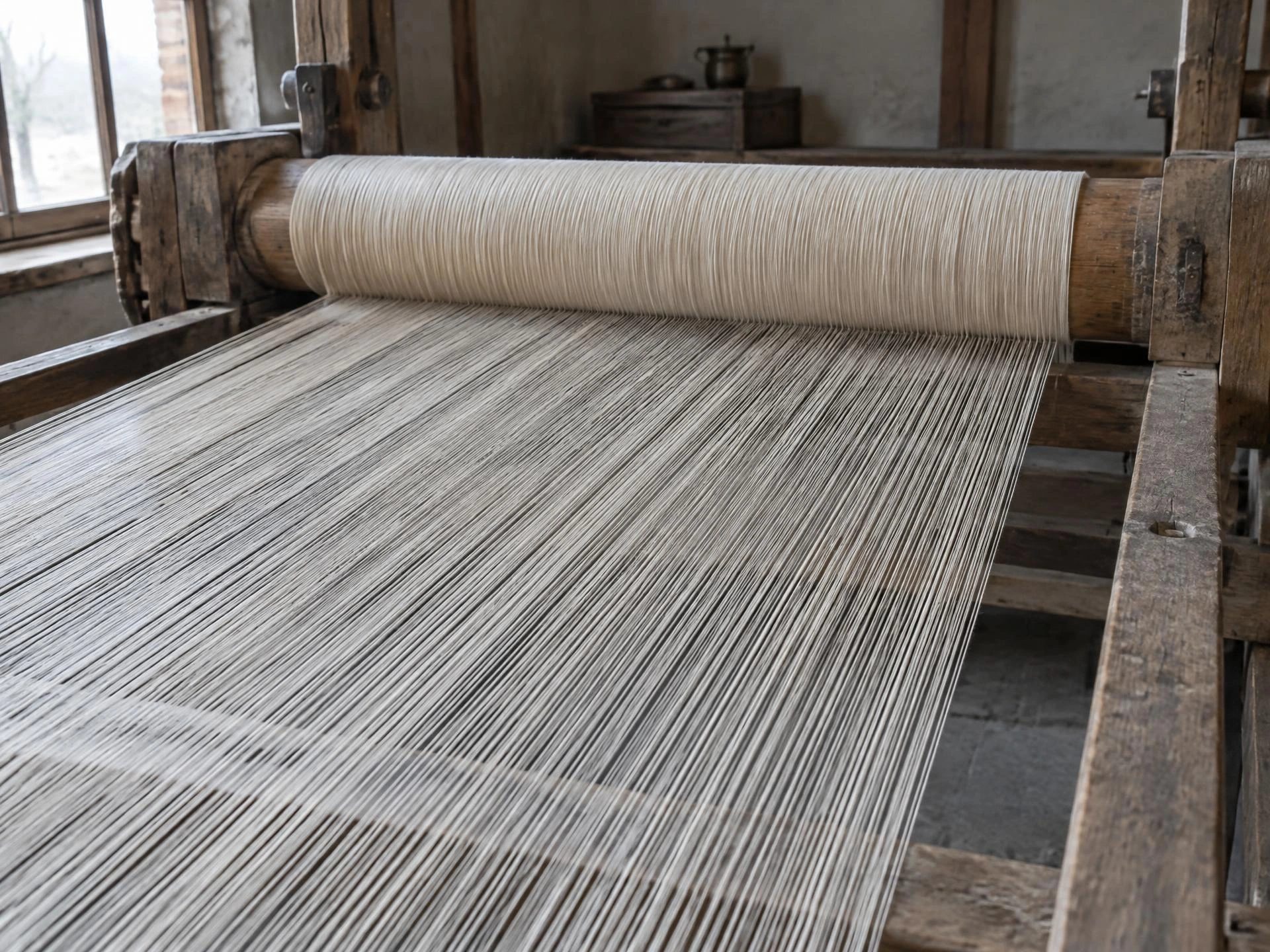
Fine fibres are also short, so there is less length for friction to hold. Hand-spinning keeps the twist light and leaves air between them. That air is what you feel when you lift a shawl: warmth without weight, and a drape that settles.
Felting begins when water, heat and movement arrive together. The scales on each fibre open, catch on their neighbours and lock. Short fibres migrate into the next yarn, the cloth tightens, and the surface that was smooth becomes dense. Shrinkage is structural, not a residue left by soap.
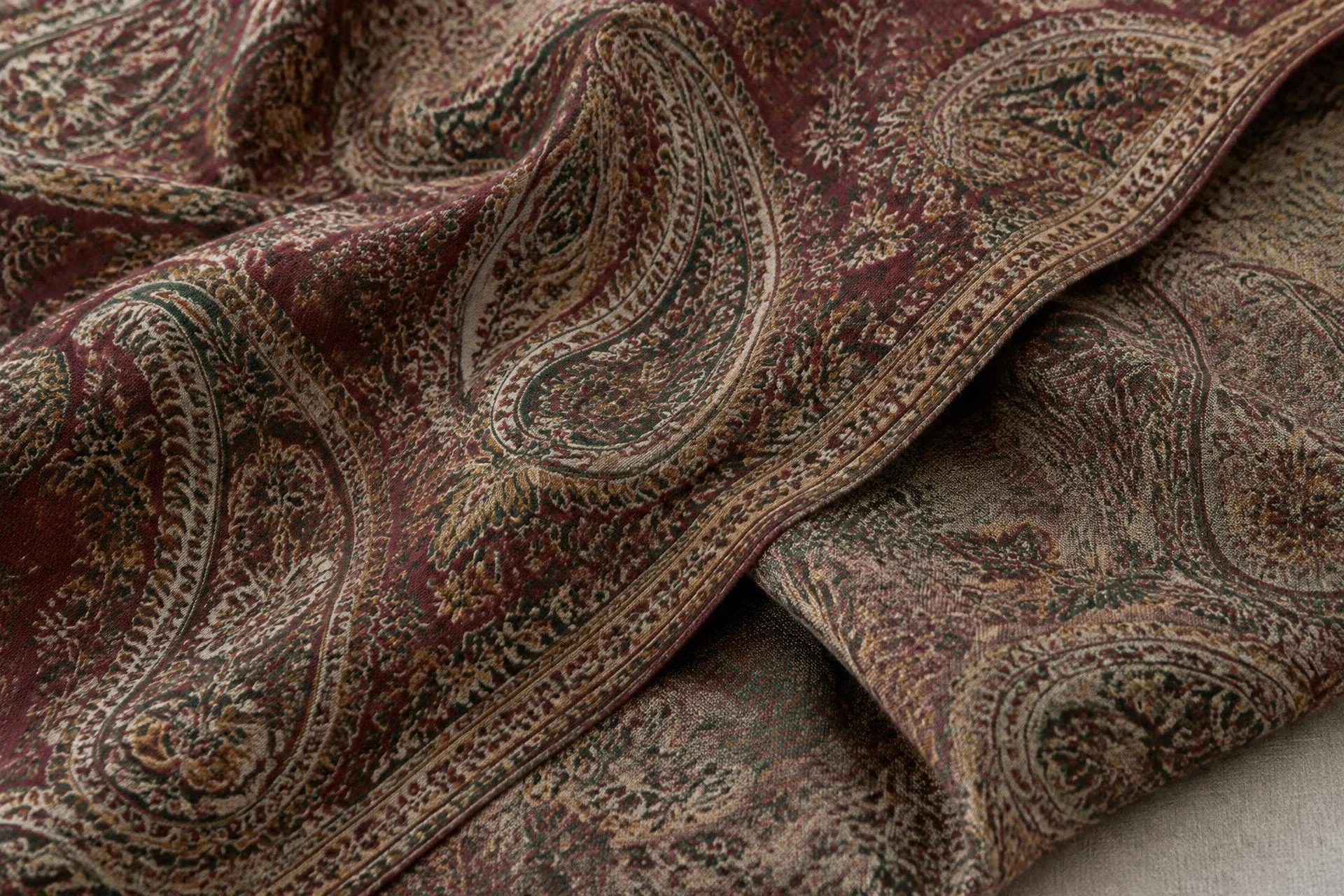
This matters most where the cloth is complex. A Kani shawl carries many small colour joins across the loom, and a Sozni piece carries embroidery worked through the woven ground. The GI records set out the fibre and handwork involved: Kashmir Pashmina is GI No. 46, Kani GI No. 51 and Sozni GI No. 48. Agitation moves one part against another, so damage is rarely even.
How often a shawl needs washing
Air a shawl after each wear. Lay it flat or fold it loosely in moving air, away from direct sun, and let body heat and surface moisture disperse. Airing does not clean, but it delays the wash.
A full wash of a pure Pashmina shawl is usually enough every three or four wears, or at the end of the season before storage. Spot-clean marks as they happen. Over-washing is the greater risk: every wash adds movement, and movement pushes fine fibres towards felt.
If the shawl smells clean and the drape is unchanged, wait. Frequent washing is not a virtue.
The hand wash, step by step
For a plain shawl, set out a pH-neutral wool detergent, two basins or a clean bath, two bath towels, a flat drying rack and cool water. Shampoo, body wash and laundry flakes are not substitutes. Shampoo can coat the fibre; flakes dissolve poorly in cool water.
Fill one basin with water at 30°C or below. If you have no thermometer, test with your wrist: it should feel barely warm, closer to cool than to a bath. Heat encourages the fibre scales to open, and that is the last thing a fine wool needs.
Add the detergent to the water and move the water, not the cloth, until it has dissolved. Detergent that sits undiluted on the shawl can leave a concentrated patch that is hard to rinse.
Lower the shawl in flat and unfolded. Press it under the surface with open palms, working from one end to the other. Never rub, scrub, twist or lift it by a single corner; a wet shawl is heavier than it looks, and one corner cannot carry the weight.
Leave it for three to five minutes. Surface soil loosens quickly, and a longer soak does not clean better; it gives the fibres more time to swell. Set a timer rather than relying on memory.
Lift the shawl with both hands, supporting its full width. Empty the basin and refill it at the same temperature. Rinse until the water runs clear, pressing rather than pouring. A cold rinse after a warm wash is a temperature shock, and shock is the other risk besides agitation.
Lay a bath towel flat, place the shawl on it and roll the towel loosely from one end. Press down along the roll, or kneel on it if the floor is clean. The towel takes the bulk of the water; wringing takes the shape out of the cloth.
Spread the shawl on a flat rack and ease it back to its intended rectangle while it is still damp. Straighten the edges and fringes, then leave it alone. Keep the rack away from radiators and direct sun.
The safest wash is the one that moves the cloth least.
Can a washing machine ever be safe?
A plain Pashmina shawl can survive a wool cycle in a mesh bag with the spin turned off. A normal cycle will felt the cloth. A machine is a calculated risk, not a method we would choose for a Kani, heavy Sozni or an older piece.
Two things decide the outcome. The first is temperature shock: a machine that washes cool and rinses warm, or the reverse, can move the fibres abruptly. The second is agitation: every turn of the drum is a small felting action, and a mesh bag reduces it without removing it.
Use the wool programme at 30°C or below, the lowest spin or no spin, and a liquid detergent made for wool. Remove it as soon as the cycle ends. Do not risk it if the care label is missing, the colour is unstable, the embroidery is raised, or the machine has a central agitator.
Drying and ironing without flattening the fibre
Never hang a wet shawl. The weight of the water pulls the weave downwards, and the stretch can become permanent as it dries. Never put it in a tumble dryer: heat and tumbling combine the two conditions that cause felting.
Dry it flat on a rack with air moving underneath. A radiator can stiffen the edges; direct sun can fade dye. Reshape the rectangle while it is damp, then leave the cloth undisturbed until it is completely dry.
Iron on the lowest setting, either through a clean damp cotton cloth or with the soleplate held two to three centimetres above the surface. Let the steam do the work. Never rest the iron directly on Sozni embroidery, and press the reverse side over a towel where the work is raised.
Do not press a sharp crease into a fold line. A crease that is set with an iron becomes a wear line, and a shawl stored on the same fold for years can weaken along it.
Stains, and when to call a specialist
Blot a stain from the edge inwards with a clean white cloth. Do not rub: rubbing pushes the substance into the yarn and lifts the surface. Use cool water and a little wool detergent, then press the area dry. Stop if the colour moves.
Oil needs patience rather than heat. Blot the surface, then dab a drop of pH-neutral detergent onto the mark and rinse with cool water. If the mark has set, or a pale cloth has darkened, leave it to a specialist.
Blot tea and coffee while wet, then rinse with cool water. Perfume and deodorant are often alcohol-based and can strip dye, so blot them and let the cloth dry away from heat. Red wine needs the same cool-water blotting, without salt or hot water; if it has dried, leave it alone.
Dry cleaning is the right call for Kani, heavy Sozni, old or fragile pieces, and anything with a lining. Construction matters as much as fibre: a lining can shrink at a different rate from the shell, and a woven Kani has joins a cleaner must recognise.
Ask whether they handle Pashmina and will clean it as a textile, not a garment. Ask what solvent they use, whether they will block the piece, and whether they will return it flat without a sharp press.
Storing a shawl between wears
Fold a shawl; do not hang it. A hanger supports two points while the rest hangs, so the cloth loses its shape. Fold it loosely, with the folds alternating rather than stacked in the same place.
Put it in a cotton or muslin bag, not a sealed plastic one. Plastic traps moisture and can hold it against the fibre, which invites mildew and a stale smell. Cedar or lavender nearby is the traditional defence against moths; keep the cedar wrapped so the oil does not mark the cloth.
Refold along different lines once a year. A fold that stays in the same place can become a weak line, and on a heavy embroidered piece it can also polish the surface. Keep the bag dry, away from sun, and stack nothing heavy on top.
If it has already shrunk or felted
A shawl that has tightened but not felted can sometimes be relaxed. Soak it in cool water with wool detergent, support it with both hands and ease it towards its original width. Do not pull. If the cloth does not move, stop; force will distort the weave without restoring the fibre.
Felted fibre cannot be un-felted. The surface will look matte and dense, the drape will be stiff, and the fibres will have locked together. No wash, vinegar rinse or conditioner reverses that. A good re-blocking can recover some width and shape, but it cannot restore the loft that has gone.
Re-blocking is a specialist job because it works from the damp cloth, with measurements, pins and a controlled drying space. On a Kani, the colour joins limit how far the cloth can safely stretch; on a Sozni piece, the embroidery does the same. Ask for an assessment before anyone starts.
Can shampoo replace wool detergent?
No, not for a Pashmina. Shampoo is formulated for hair, and many formulas include conditioners that leave a coating on wool. A pH-neutral wool detergent rinses clean and is the safer choice. If you have nothing suitable, wait.
Can a Pashmina shawl be machine washed?
It can be done on a wool cycle, in a mesh bag, with no spin and the water at 30°C or below. Never use a normal cycle. We would not machine wash a Kani, a heavy Sozni, a vintage piece or anything with unstable colour.
How often should a Pashmina shawl be washed?
Every three or four wears, or at the end of the season, is enough for most shawls. Air it between wears and spot-clean marks when they happen. More frequent washing is more likely to damage the fibre than to improve the cloth.
Does dry cleaning damage Pashmina?
Not automatically, but it is not risk-free. Solvent removes oils, and the mechanical action and pressing that follow can flatten the surface or distort the shape. Choose a cleaner who knows fine wool and embroidery; reserve dry cleaning for pieces that need it.
Care is mostly restraint. Cool water, a mild detergent, a flat surface and the patience to let the shawl dry without help will do more than any specialist product. A shawl that has been washed carefully will still need air, shade and a loose fold. To compare weights and shades, where to buy explains how private enquiries work.