People · 1 min read
A Language Woven in Thread
How Kani weaving passes from one generation to the next — at home, beside the loom.
20 January 2026
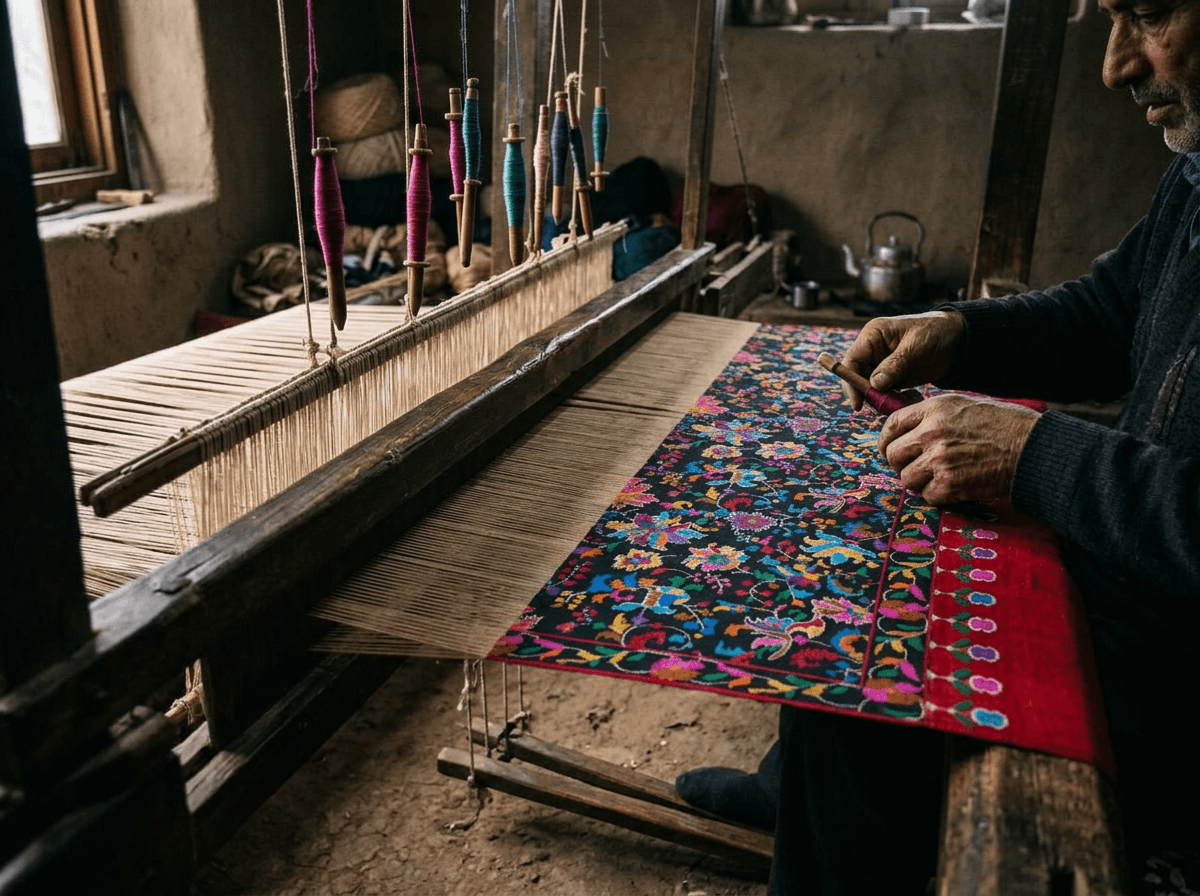
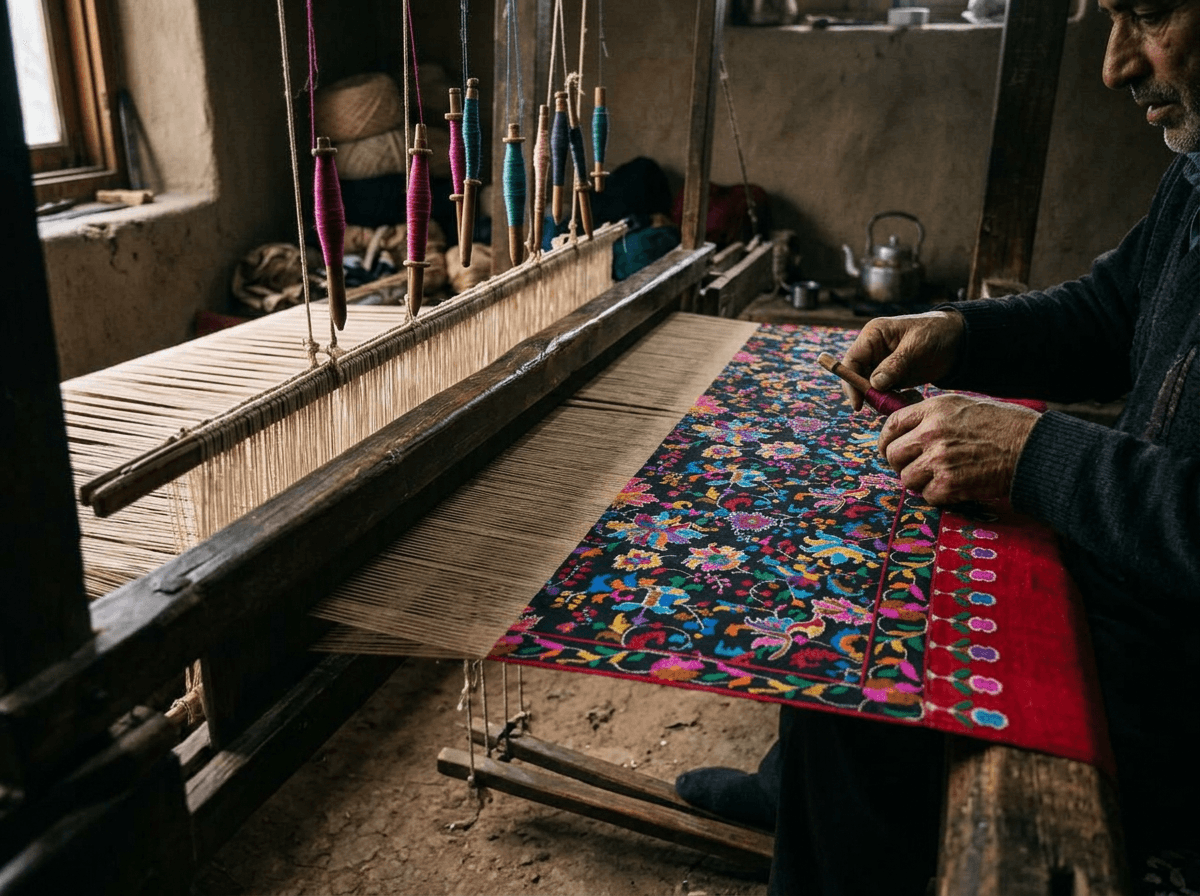
Many Kashmiri weavers cannot remember the first time they entered a weaving room. In weaving families, the loom is part of childhood: timber in the corner, yarn drying above the stove, a parent’s hands moving with a certainty that seems as natural as speech.
Children learn by watching long before they are taught. Reading a simple talim, the coded pattern sheet, often comes in the early teens; real fluency takes years more.
Learning by correction
Much of the skill lies in small corrections: the tension of the warp, a straight edge, the exact point where one colour meets the next. An experienced weaver stays alert even when the pattern is familiar, because a mistake woven in cannot be painted over.
The next pair of hands
A craft survives when it is practised, not only admired. The hope in weaving families is not that the young repeat the past exactly, but that they learn it well enough to carry its discipline forward.
Our own family is now in its fourth generation of this work. Every finished Kani is both an inheritance and a beginning.
Continue Reading