Kani · 1 min read
The Art of Kani Weaving
A language of colour, memory and patience, spoken one wooden needle at a time.
20 September 2026
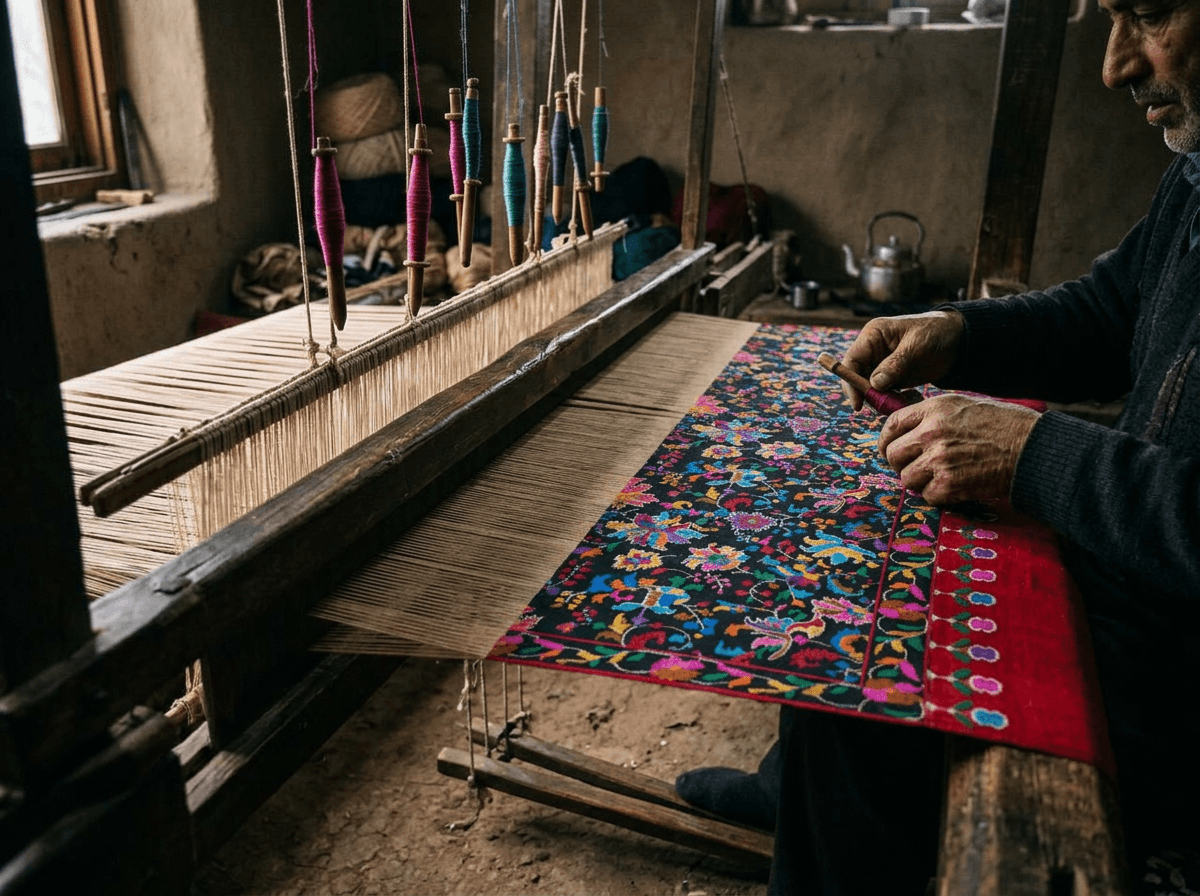
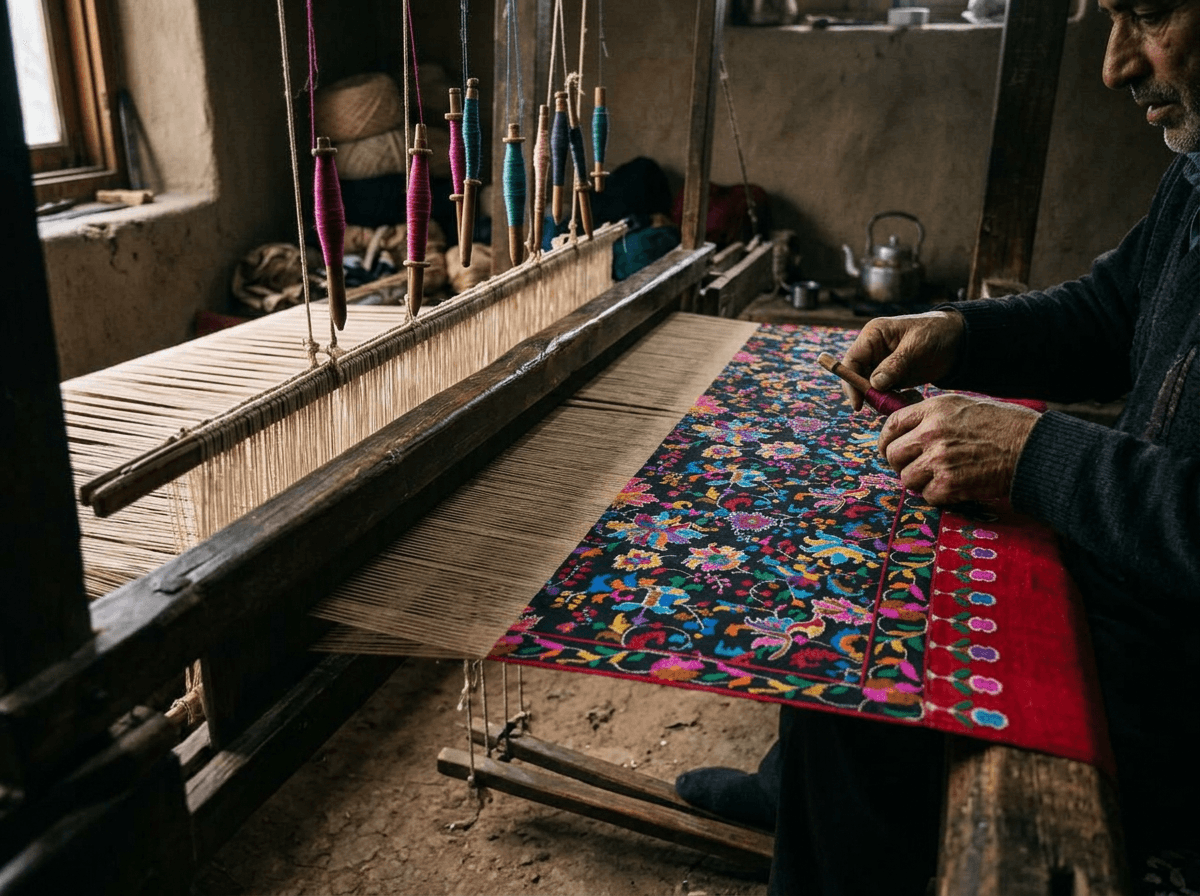
There is no haste at a Kani loom. The weaver sits before a forest of warp threads, a coded pattern close at hand, and begins the long work of translation. Each small wooden needle carries a single colour. Each movement answers the one before it.
The pattern is not printed upon the cloth. It enters the textile as the textile is made — colour and structure becoming inseparable.
A vocabulary held in the hand
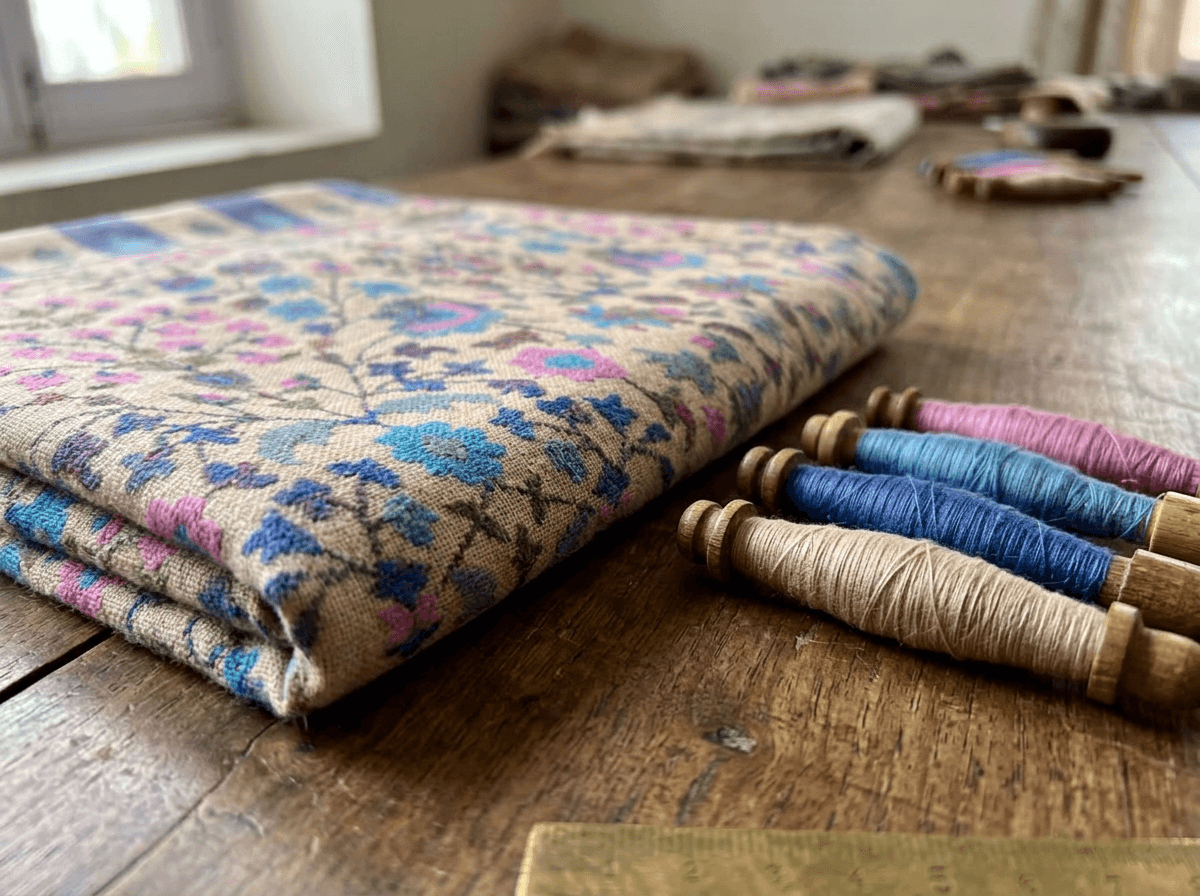
The word kani names the slender wooden bobbins used to carry coloured weft through the warp. In the hands of a master, they become instruments of astonishing precision. A single shawl may ask for dozens of them, changing places thousands of times as a garden of boteh, cypress and blossom slowly appears.
What looks fluid from a distance is built from decisions measured thread by thread.
A Kani is not decorated after it is woven. Its beauty is the act of weaving itself.
Time made visible
Fine Kani work can occupy a loom for seasons, sometimes years. This duration is not an inconvenience to be overcome; it is the source of the object’s character. The finished textile bears the quiet evidence of sustained attention — the cadence of hands, winter light across the workshop, knowledge passed between generations.
To wear Kani is to carry time without weight.
Continue Reading